Phone Marriage: Gentle Screen Rules for Christian Couples
Phone marriage can quietly reshape a home. Here are practical, grace-filled screen rules Christian couples can build together for evenings, meals, bedrooms, and Sabbath.

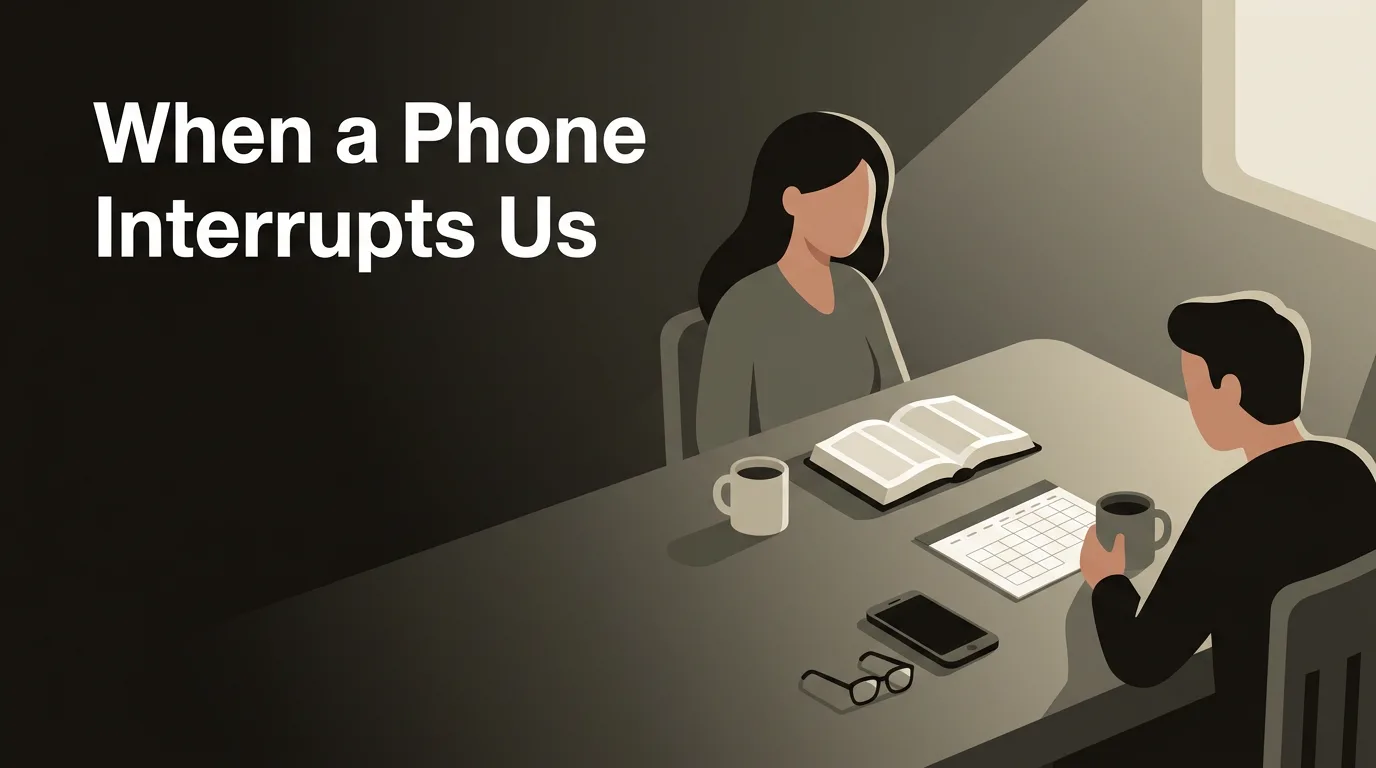
Phone marriage is what it can feel like when a device quietly becomes the third presence in a relationship. Not because either spouse is careless, but because modern life keeps asking for our eyes. A work text lands during dinner. Instagram fills the gap between bedtime routines. One spouse scrolls while the other starts talking. Little by little, couple screen time can shape the tone of a home.
Many Christian couples do not need a lecture about priorities. They need honest, usable marriage screen rules that fit real life with jobs, kids, carpools, late emails, and tired evenings. The goal is not to make phones the enemy. The goal is to protect attention, because attention is one way love takes bodily form.
"Let each of you look not only to his own interests, but also to the interests of others." - Philippians 2:4
How phones become a third person in marriage
Usually it happens in ordinary places. At breakfast, one of you checks the news while the other is trying to coordinate the day. In the car, both of you reach for your phones at red lights and the small moments of conversation disappear. At a restaurant table, the phones stay on the table "just in case," and that silent possibility keeps pulling at your minds. None of this looks dramatic. That is part of why it is hard to notice.
For many couples, the issue is not only quantity of use. It is timing. A five-minute glance at the wrong moment can communicate, "Something else has my attention first." Over time, that can create loneliness, defensiveness, or low-grade resentment. Good christian marriage habits begin by naming that reality without shame.
This is about presence, not perfection
You do not need a pristine, screen-free farmhouse life to grow closer. You need a few shared fences. Fences are not punishments. They are agreements that make love easier to practice when everyone is tired. If both spouses still need phones for work, that matters. Your rules should be clear enough to protect connection and flexible enough to honor real responsibilities.
Five practical fences couples can build together
1. Create a simple evening ritual
The hour after the kids go down is often where marriages either reconnect or drift into parallel scrolling. Try a 15-minute evening ritual before either of you opens social media or streaming apps. Sit on the couch, clear the counter together, make tea, or step onto the porch. Ask the same three questions each night: What felt heavy today? What was good today? What do you need tomorrow?
- Put phones on a charger outside the room where you talk
- Set a shared start time, such as 8:30 p.m., for your check-in
- Keep it short enough that tired nights still count
- End with a one-sentence prayer for each other
2. Make a no phones bedroom rule
A no phones bedroom habit is one of the clearest ways to protect tenderness. Bedrooms are for sleep, conversation, intimacy, and prayer, not endless input. If you use your phone as an alarm, replace it with a basic clock if you can. If work emergencies are real, decide together what qualifies as urgent and whose phone stays available.
- Charge both phones in the kitchen or hallway
- Choose a bedtime cutoff, such as 10 p.m.
- If one spouse is on call, keep only that phone available
- Do not bring social apps into bed, even for "just a minute"
3. Protect screen-free meals
Screen-free meals are not mainly about manners. They are about retraining attention. Breakfast may be brief, but even ten phone-free minutes can settle a home. Dinner is often where children learn what adults value. When parents keep checking their phones, kids notice. When parents put phones away, kids notice that too.
A helpful practice is to place every device in the same spot before sitting down. Not on the table, not in a pocket, not face-down beside the plate. Put them in a basket on the counter. If you are expecting an important call, say it out loud so the exception stays honest and limited.
4. Share calendar access to reduce invisible phone use
Sometimes what looks like distraction is actually family management. Shared calendar access can lower the need for frantic checking and back-and-forth texting. When both spouses can see school events, work travel, pediatric appointments, and church commitments, phones become less of a private command center and more of a practical tool.
- Use one shared calendar for family logistics
- Color-code work, kids, church, and personal commitments
- Review the next day together for five minutes after dinner
- Keep calendar checks intentional instead of constant
5. Practice a joint Sabbath from optional screens
A joint Sabbath does not have to mean disappearing for 24 hours. Start smaller. Choose a half day each week when both of you step away from optional screens together. No social media, no online shopping, no casual news checking. Use the space for church, naps, a walk with the stroller, lunch with friends, reading aloud, or simply being bored enough to notice God again.
This kind of shared reset can help with phone marriage because it changes the atmosphere of the home, not just one person's habits. It teaches your bodies that rest is possible without a glowing screen nearby.
What to say when you bring this up with your spouse
Start gently and specifically. Not, "You're always on your phone." Try, "I miss you at night," or "I feel disconnected when we both scroll after dinner." Stay close to lived moments: bedtime, the dinner table, the car line, the couch. The aim is not to win a case. It is to build a shared plan.
You can also ask, "Where does our phone use help our family, and where does it quietly take from us?" That question invites honesty without blame. Often both spouses already feel the tension. One just names it first.
Try a prayer-first phone habit
If your home needs a gentler way to interrupt automatic scrolling, Prayin can help. Lock distracting apps behind a 60-second prayer so you can pause, reset, and return to your spouse with clearer attention.
Install PrayinA small rule of life for busy couples
- No phones during the first ten minutes after one spouse gets home
- No phones at the table during breakfast or dinner
- No phones in the bedroom after the agreed cutoff
- One shared calendar check each evening
- One half day each week for a joint screen Sabbath
These are the kinds of marriage screen rules that can actually survive a busy season. Keep them visible on the fridge or in a shared note. Revisit them monthly. If one rule keeps failing, make it smaller instead of giving up. Faithful habits usually begin in humble sizes.
Frequently asked
How do phones affect marriage?
Phones can interrupt small moments of attention that build connection, especially at meals, bedtime, and transitions after work. The issue is often not just screen time, but when and how devices pull focus away from a spouse.
What is a good no phones bedroom rule for couples?
A simple rule is to charge phones outside the bedroom and set a nightly cutoff time. If one spouse must stay reachable for work, define clearly what counts as urgent.
How can Christian couples reduce screen time without being legalistic?
Start with one or two shared fences, such as screen-free meals or a short evening check-in. Frame the goal as protecting presence and peace, not proving spiritual maturity.
Do screen-free meals really help family connection?
Yes. Screen-free meals create regular space for eye contact, conversation, and emotional check-ins. Even short phone-free breakfasts or dinners can change the feel of a home.
Start your trial
The apps that pull at you stay quiet until you pray. Christian screen-time, built on Apple Family Controls.
Install Prayin Lock