Marriage Screen Rules for Couples Who Want Their Evenings Back
Marriage screen rules can help Christian couples notice when a phone starts acting like a third person in the room. Here are practical habits for evenings, meals, calendars, and bedtime.
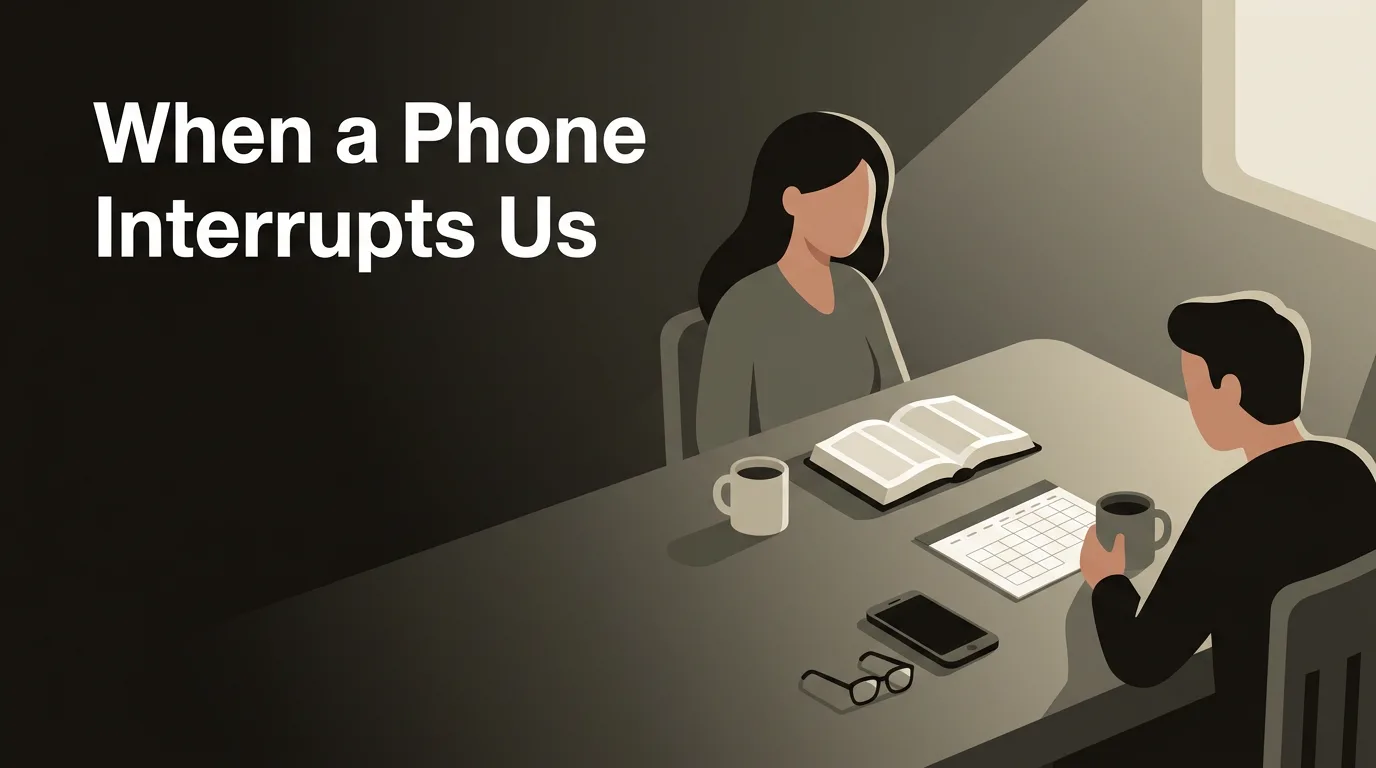
Marriage screen rules are not about treating each other like children. They are about admitting a hard thing with honesty: sometimes a phone starts to feel like a quiet third person in marriage. If you have ever looked up from dinner and realized both of you are elsewhere, these small, practical habits can help.
How a phone becomes the third person
Usually it does not happen through one dramatic fight. It happens in tiny moments. One spouse reaches for email during breakfast. The other answers a group text in bed. A quick check after the kids are down becomes forty minutes of separate scrolling on the same couch. The room is shared, but attention is not.
- At the table, conversation gets interrupted by notifications.
- In the car, silence is filled with feeds instead of real check-ins.
- At bedtime, one more scroll delays sleep and pushes prayer aside.
- During small windows of rest, phones become the default instead of presence.
"Let each of you look not only to his own interests, but also to the interests of others." - Philippians 2:4
Why Christian couples need practical fences
For many married Christians, the issue is not that phones are evil. Work messages matter. School updates matter. Family logistics matter. The challenge is that without agreed marriage screen rules, the urgent keeps eating the important. Presence with your spouse, prayer, laughter, and ordinary conversation get whatever is left.
Good fences do not punish. They protect. In marriage, a fence is simply a shared decision that keeps love from always losing to convenience.
Start with one honest sentence
Try saying this tonight: "I do not think my phone is the main problem, but I do think it is shaping our evenings." That sentence is less accusatory than "You are always on your phone," and it opens the door to teamwork.
Five marriage screen rules you can build together
1. Create a simple evening landing ritual
When work ends and family life begins, most couples need a transition. Pick one place where both phones go for the first 20 to 30 minutes after everyone is home. Then do the same few things in the same order: greet each other, refill water, check on the kids, and ask one real question. Repetition helps your body learn that home is not just another place to keep consuming.
2. Make screen-free meals the default
Screen-free meals work best when they are boringly clear. Phones do not belong on the table, even face-down. If one spouse is on call or waiting for urgent news, name that before the meal starts. Otherwise, let breakfast or dinner become a small daily liturgy of attention.
- Put a basket or tray near the dining area.
- Use one question to open the meal, like "What felt heavy today?"
- If you have kids, let them see the adults follow the same rule.
- Do not turn the meal into a lecture about technology. Just practice the habit.
3. Revisit the no phones bedroom rule
A no phones bedroom habit is not legalism. It is often just wisdom. Bedrooms are for sleep, intimacy, prayer, and unhurried conversation. If alarms are the issue, use a simple clock. If one of you needs the phone nearby for family emergencies, charge it across the room instead of in your hand.
Many couples notice that bedtime scrolling creates avoidable friction. It delays sleep, numbs affection, and keeps both spouses half-present. A bedroom rule can be as modest as this: phones dock by 10 p.m., and no social apps after that point.
4. Share calendar access to reduce hidden phone checking
Sometimes constant checking is not about entertainment at all. It is about mental overload. Shared calendar access helps because one spouse no longer has to keep reopening a phone to remember pickups, appointments, sports, church events, and grocery runs. Good systems reduce compulsive checking.
This is one of the most overlooked christian marriage habits in a busy season. Order lowers tension. When both spouses can trust the plan, they can put the phone down faster.
5. Try a joint Sabbath window
Not a full day, at least not at first. Start with a three-hour block each week when both of you silence nonessential apps. Take a walk, fold laundry together, read aloud, visit family, or sit on the porch after church. A joint Sabbath window works because neither spouse feels stranded while the other disappears into a feed.
What this looks like in real life
At breakfast, one couple keeps phones on the counter until everyone has eaten. In the car after church, they do not open messages until they have each answered one question: "What stayed with you from today?" At restaurants, they stack phones in the center of the table and only touch them if there is a childcare need. At bedtime, they plug devices in the kitchen and keep a small lamp, a Bible, and a notebook by the bed instead.
These are not dramatic moves. That is the point. Most healthy marriage screen rules are ordinary enough to repeat.
Try a gentler way to pause before apps
If certain apps keep pulling you away from your spouse, Prayin can lock them until you spend 60 seconds in prayer. It is a simple way to build a pause before reflexive scrolling.
Install PrayinHow to talk about phones without turning it into a fight
Use observation before accusation. Say what you notice, name what you miss, and suggest one experiment. For example: "I miss talking with you after the kids go down. Could we try putting our phones away until 9 p.m. this week?" Concrete and time-bound is usually better than emotional and absolute.
- Pick one problem moment, not your entire marriage.
- Choose one experiment for seven days.
- Review it kindly: what helped, what felt hard, what needs to change?
- Celebrate partial progress. The goal is not perfection, but greater presence.
"Be very careful, then, how you live, not as unwise but as wise, making the best use of the time." - Ephesians 5:15-16
When both spouses still need their phones for work
This is where nuance matters. You may need exceptions. One spouse might be on call. Another may need late messages from a boss in a different time zone. Instead of pretending work is not real, define what counts as necessary. Maybe email is allowed after 8 p.m., but social apps are not. Maybe one chair in the house is the "work check" spot, so work does not spill into every room.
That kind of clarity supports couple screen time without forcing a fake simplicity on a complicated life.
A gentle closing thought
If your phone has become too present in your marriage, shame will not fix it. Small repentance, honest conversation, and repeatable habits often will. The goal is not to prove that you are disciplined. The goal is to make more room for attention, tenderness, and the kind of daily faithfulness that marriage quietly runs on.
Frequently asked
How do Christian couples set phone boundaries without feeling controlling?
Start with shared goals, not rules alone. Name what you both want more of, like better sleep or calmer dinners, then choose one small habit to support that goal.
Does a no phones bedroom rule really help marriage?
For many couples, yes. It removes a common source of bedtime distraction and makes more space for sleep, conversation, prayer, and intimacy.
What are easy screen-free meals rules for busy families?
Keep phones off the table, use one drop spot nearby, and make exceptions only for urgent needs. Consistency matters more than complexity.
What if our jobs require evening phone use?
Set clear categories for what is necessary and what is optional. You can allow work essentials while still blocking social apps or entertainment during key family hours.
Start your trial
The apps that pull at you stay quiet until you pray. Christian screen-time, built on Apple Family Controls.
Install Prayin Lock