Family Screen Time That Teaches Self-Control, Not Surveillance
Family screen time can either train attention or drain it. Here is a practical Christian guide for parents of tweens and teens who want calmer phone habits without constant surveillance.
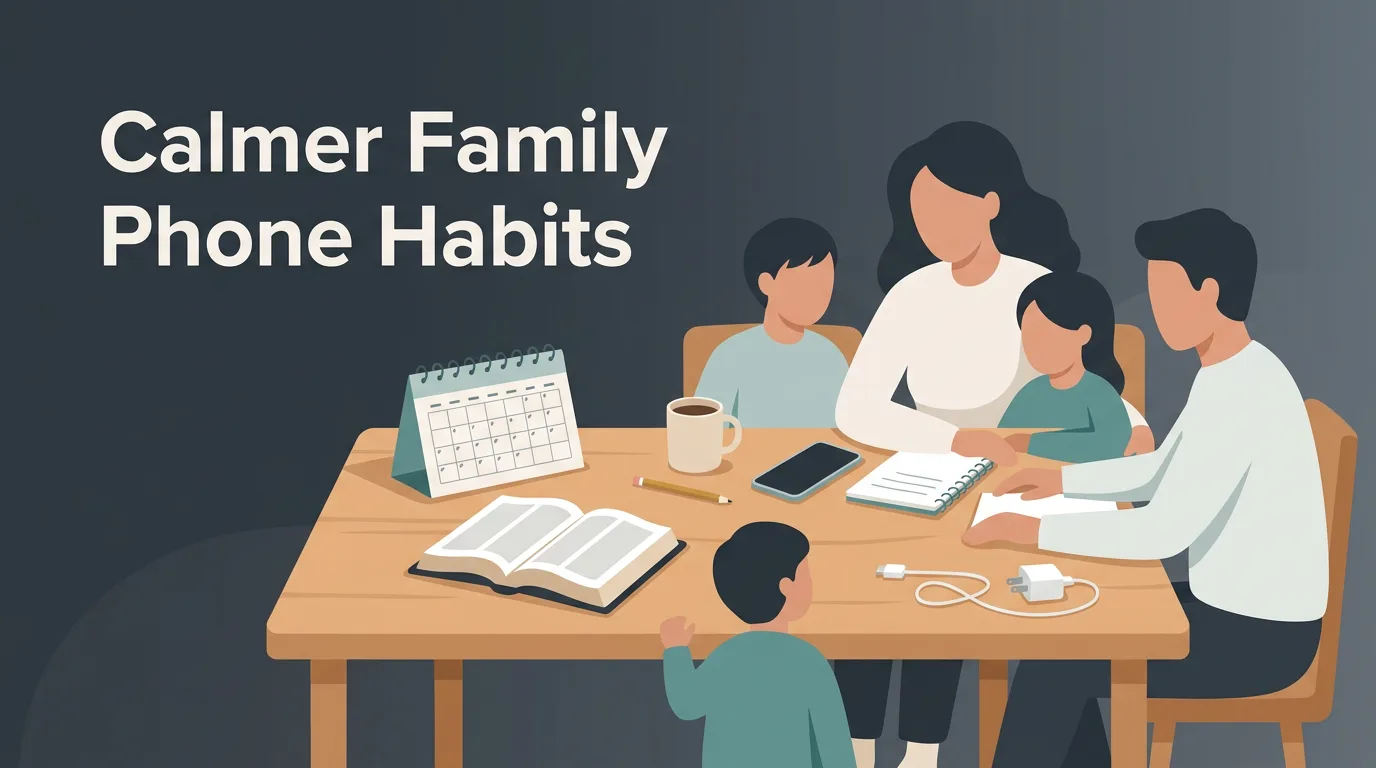
Family screen time is not only about minutes and apps. It is about what kind of people your home is becoming. For Christian parents, the goal is not perfect control. It is helping children grow in self-control, honesty, and the ability to put a phone down without panic.
Start with formation, not fear
Many parents begin phone conversations with warnings. Some warnings are necessary. But if fear is the whole message, children learn that phones are either forbidden fruit or private territory. A better starting point is this: a phone is a useful tool, but it is a terrible master. In a Christian home, family screen time should serve love, attention, schoolwork, rest, and worship, not crowd them out.
"All things are lawful for me, but I will not be dominated by anything." - 1 Corinthians 6:12
- Say out loud what the phone is for in your home: communication, school logistics, music, maps, photos, and limited entertainment.
- Name what the phone is not for: secret life, endless escape, cruelty, and constant interruption.
- Tell your kids that the goal is not just rule-keeping. The goal is learning how to love God and neighbor with their attention.
Model the rule before you assign it
Children can spot hypocrisy quickly. If parents scroll through dinner, check sports scores during devotions, or answer every buzz immediately, lectures will not land. Before you set rules for tweens or teens, audit your own habits. If family screen time feels chaotic, parents should go first in repentance and repair.
A simple parent audit
- Keep your own phone out of reach at meals for two weeks.
- Charge your phone outside the bedroom, if your season of life allows it.
- Do one daily task, like folding laundry or driving carpool, without audio or scrolling.
- Say, "I am working on this too," when you introduce new house habits.
Need help slowing the scroll?
If you want a practical way to build a pause before distracting apps, Prayin locks selected apps until you spend 60 seconds in prayer. It is a gentle tool for parents who want to model the habit first.
Install PrayinBuild one family rhythm each week
Large, dramatic resets often fail because they ask too much at once. Instead, choose one shared rhythm that makes family screen time calmer. Keep it visible and repeatable. The point is not to create a tense household. The point is to make attention easier.
Three rhythms that work in real homes
- One screen-free meal each day. Start with dinner, or breakfast if evenings are chaotic.
- One shared phone basket during homework, from 7 to 8 p.m. or another realistic hour.
- One half-day each weekend with entertainment apps off, while basic communication stays available for older teens.
Notice the compromise. Older teens may need phones for team updates, jobs, maps, or group projects. A wise rule separates necessary access from default entertainment. This is how you avoid the false choice between total freedom and total lockdown.
Have the first phone conversation before the first problem
The best first-phone talk is not one dramatic speech. It is a short series of calm conversations. Cover the practical basics, but also explain the spiritual stakes. A smartphone changes the speed of temptation, distraction, and comparison. It also changes the speed of encouragement, learning, and connection. Your child needs a framework, not just filters.
What to say in the first-phone conversation
- "This phone belongs to our household before it belongs to you. We are lending it to you as you grow in wisdom."
- "Privacy matters, and so does accountability. We will not spy for sport, but we will stay involved."
- "If something strange, sexual, cruel, or confusing appears, you are not in trouble for telling us."
- "We are not trying to control every click. We are trying to help you practice honesty before God and with us."
Monitor without turning your home into surveillance
Parents need visibility, especially with tweens. But constant hidden monitoring can train kids to become better at hiding rather than better at choosing. Monitoring works best when it is declared, limited, and reviewable. In other words, children should know what is being checked, why it is being checked, and when those checks can decrease as trust grows.
A healthier accountability plan
- Tell younger kids exactly what tools are on the phone, including content filters, app approvals, and screen-time limits.
- Do weekly check-ins in the open, not random secret raids when possible.
- Review patterns more than isolated mistakes. Look for repeated late-night use, deleted messages, or sudden secrecy.
- Increase freedom gradually for older teens who show honesty, not merely rule compliance.
- Keep one non-negotiable: no disappearing apps, hidden accounts, or secret devices.
This approach respects the real asymmetry between a 12-year-old and an 18-year-old. Younger children need stronger structure. Older teens need guided practice in freedom. Both need parents who are present, calm, and not easily shocked.
Use Sabbath-like limits without pretending your family lives off-grid
A weekly pause can reset the pace of the home. You do not need an idealized, candlelit, no-technology fantasy. You just need a repeatable limit that reminds everyone that people are more important than notifications. For many families, a Sabbath-like phone practice means quieting entertainment and social media for a set window while keeping essential communication available.
- Choose a weekly window, like Saturday morning or Sunday after church until dinner.
- Decide what stays on: calls, texts from approved contacts, maps, music for travel.
- Decide what turns off: short-video apps, games, endless browsing, optional notifications.
- Replace the vacuum with something concrete: pancakes, a walk, reading aloud, visiting grandparents, chores done together.
"Teach us to number our days that we may get a heart of wisdom." - Psalm 90:12
Give your kids one small replacement habit
Rules alone leave a vacuum. Most teens do not need a speech every time they reach for a phone. They need a better next step. Choose one replacement habit that is easy enough to repeat when boredom hits.
- Keep a physical Bible in the kitchen or living room instead of saying, "just use your phone Bible," if the phone itself is the trigger.
- Put a prayer card, journal, or book of Proverbs near the family charging spot.
- Teach a 60-second pause before opening entertainment apps: breathe, notice what you are feeling, and pray one honest sentence.
- Create a default boredom list: shoot hoops, walk the dog, make tea, text a grandparent, practice guitar, read ten pages.
Aim for trust that can survive adulthood
The long game of parenting is not raising a child who behaves well only under restriction. It is raising a young adult who can carry wise habits into college, work, and ordinary private life. That means your rules should slowly move from external control to internal conviction. Ask not only, "Did they obey?" but also, "Are they learning to tell the truth, stop when they should, and come to us when they fail?"
If your home has already become tense around devices, start smaller than you want. Pick one meal, one nightly charging spot, one weekly check-in, and one Sabbath-like window. Then keep going. Grace and consistency usually do more than intensity.
Frequently asked
How much family screen time is healthy for teens?
There is no perfect number for every family. A healthier question is whether screen use is crowding out sleep, schoolwork, relationships, worship, and in-person responsibility.
How can Christian parents monitor phones without spying?
Use declared accountability. Tell your child what is monitored, review it openly, and reduce oversight as honesty and maturity grow.
Should teens have phones during Sabbath or church time?
Many families keep basic communication available but turn off entertainment and social apps. The goal is not perfection, but a repeatable pause that protects worship and presence.
What is the best first phone rule for a tween?
Start with a nightly charging spot outside the bedroom. It protects sleep, reduces secrecy, and creates a natural daily boundary.
Start your trial
The apps that pull at you stay quiet until you pray. Christian screen-time, built on Apple Family Controls.
Install Prayin Lock