Christian Digital Detox Story: The 7:40 Train Ride That Became a Prayer Habit
A christian digital detox story about one commuter who locked her phone, stumbled through weeks 2 to 4, and slowly rebuilt prayer in ordinary life.

My christian digital detox story did not begin at a retreat or after a dramatic sermon. It began on the 7:40 train, with my phone warm in my hand and my Bible still zipped in my bag, again.
I am calling her Elena, though she is really a composite of several believers who noticed the same thing at nearly the same time. The commute was only twenty minutes. That was the humiliating part. She was not losing whole evenings to chaos. She was losing tiny, repeatable pockets of attention, the kind that could have become prayer.
A small habit that kept winning
Elena started each morning with good intentions. She would sit down by the train window, tell herself she would read one psalm, and then check one notification first. One message became Instagram. Instagram became short videos. By the time the train reached her stop, her mind felt crowded and oddly thin at the same time.
"Teach us to number our days, that we may gain a heart of wisdom." - Psalm 90:12
She did not need a grand theory to know something was off. She needed honesty. Her phone was not evil. But it had become the easiest way to avoid silence, and silence was where God kept meeting her.
Why week one felt easy
Like many an app fast testimony, her first week came with energy. She deleted the most distracting apps and felt almost heroic for forty-eight hours. The train felt calmer. Her eyes stopped darting to the screen every thirty seconds. She even texted a friend that maybe this would be easier than she feared.
- She packed her Bible where she could reach it without digging through her bag.
- She turned off nonessential notifications before bed.
- She chose one simple prayer for the ride: "Lord, make me present."
- She left her phone face-down in her coat pocket for the first half of the commute.
Weeks 2 to 4 were the real story
This is where many tidy testimonies skip ahead. But the middle is where screen time recovery actually happens. By week two, Elena was tired. Work picked up. Group chats became busier. She reinstalled one app "just for messages," then caught herself lingering after the messages were done.
The phone felt heavier in her pocket on those days, not physically, but morally, almost like a private argument she kept carrying around. She would lock it, unlock it, then feel silly for needing boundaries in the first place. That embarrassment nearly undid her more than the apps did.
What helped when motivation wore off
The shift came when she stopped treating discipline like a mood and started treating it like a liturgical cue. She began using a Christian app blocker so the most distracting apps stayed closed unless she paused to pray for sixty seconds first. The interruption was short, but it was long enough to make impulse visible.
- When she wanted to open a distracting app, she had to stop and name what she was feeling: bored, lonely, stressed, or numb.
- If the urge remained after prayer, she could still make a conscious choice instead of an automatic one.
- She kept one line in her journal: "What was I reaching for just now?"
- She tracked consistency, not perfection, because missing a day was not the same as quitting.
A gentle way to interrupt the scroll
If your phone keeps taking the small spaces where prayer could grow, Prayin can help. It locks distracting apps until you pause for a 60-second prayer, giving your attention a chance to come back to God before the scroll begins.
Install PrayinThis was not really about deleting apps
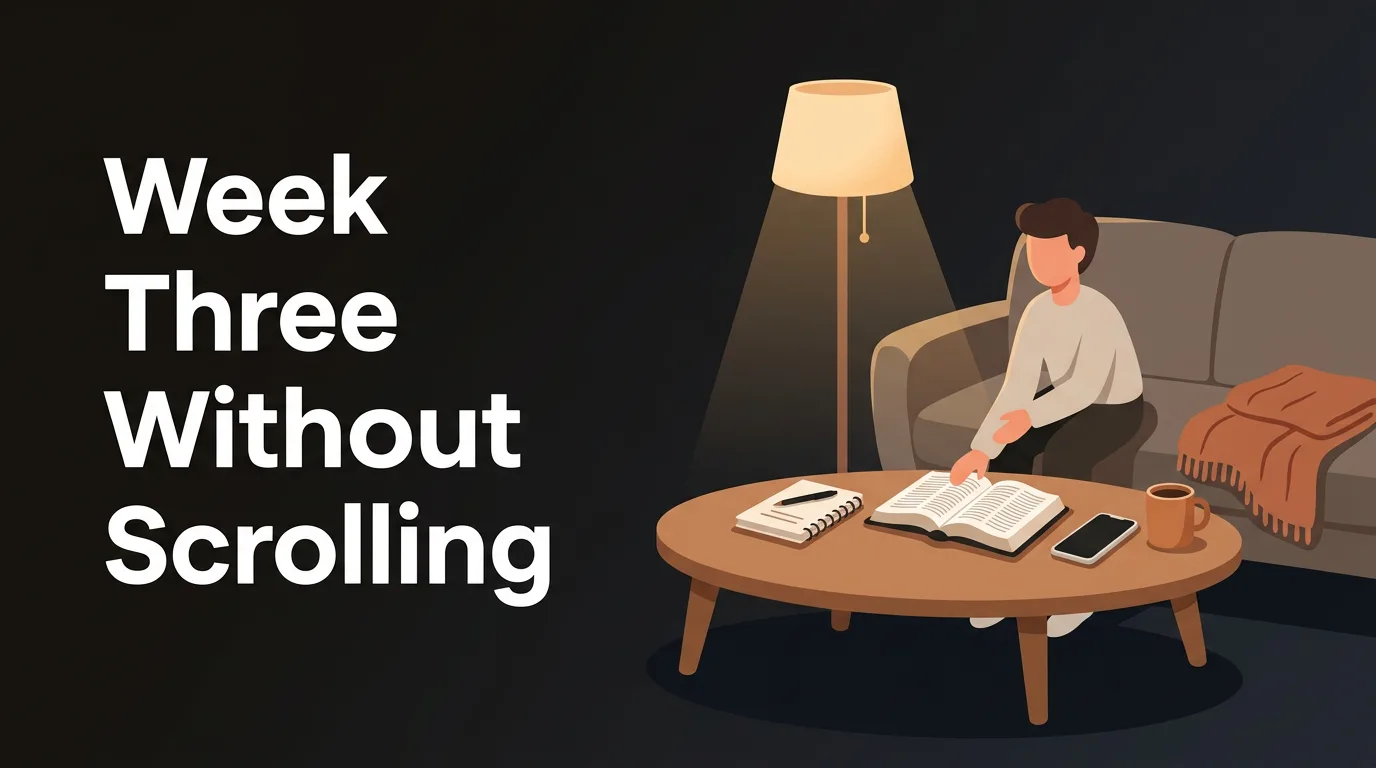
By week three, Elena realized her christian phone testimony was less about social platforms and more about reflexes. She reached for the screen when she felt behind, when she felt unimportant, when she did not want to think, and sometimes when she was simply waiting for coffee. The habit had spread into every seam of the day.
That discovery hurt, but it also made change more concrete. Instead of saying, "I need less phone," she started asking better questions. What moment am I trying not to inhabit? What prayer am I avoiding? That is when her christian digital detox story became less performative and more truthful.
Her social media fast story in one sentence
It was not, "I quit and never looked back." It was, "I kept finding myself in the same place, and by God's mercy I kept beginning again." That is a more believable social media fast story for most Christians anyway.
"Our hearts are restless until they rest in You." - Augustine, Confessions
The practical changes that lasted
The lasting changes were ordinary enough to seem unimpressive, which is usually how faithful habits look from the outside. But they worked.
- She made the first ten minutes of the commute a no-scroll zone.
- She kept one psalm bookmarked for rushed mornings.
- She prayed through the simple pattern praise, repent, ask, yield when her thoughts felt scattered.
- She charged her phone across the room at night so the day did not begin with a grab.
- She told one friend about the experiment and sent a weekly voice note instead of posting about it online.
After a month, her life was not transformed into monastic serenity. She still felt the pull. Some mornings she still chose the easier distraction. But the difference was that prayer had become available again, not as an ideal version of herself, but in the actual texture of her commute, her fatigue, and her ordinary waiting.
If this sounds uncomfortably familiar
Maybe your own screen time recovery will not happen on a train. Maybe it will happen in the school pickup line, in the kitchen after the kids are asleep, or in the five minutes before work. Start smaller than your pride wants. Pick one place, one trigger, and one prayer.
A believable app fast testimony is rarely dramatic. It is usually a story of repeated interruption, quiet repentance, and small returns. This one is illustrative, drawn from common patterns many Christians know well.
Frequently asked
What is a christian digital detox story?
It is a personal account of reducing phone or social media use in order to recover attention, prayer, and healthier daily habits as a Christian.
How long should a social media fast be for Christians?
Many people start with one week or one month. The better question is whether the fast creates space for prayer and honest reflection, not just temporary restriction.
Can an app blocker help with screen time recovery?
Yes. A blocker can interrupt automatic behavior and create a pause, especially when it is tied to a meaningful habit like prayer.
What if I keep failing my Christian phone boundaries?
Failure is common in habit change. Start again with one specific boundary, one honest prayer, and one supportive person who knows what you are trying to change.
Start your trial
The apps that pull at you stay quiet until you pray. Christian screen-time, built on Apple Family Controls.
Install Prayin Lock