Christian media habits changed during a lunch break
A quiet, first-person reflection on christian media habits, what changed during ordinary lunch breaks, and how prayer slowly reclaimed attention.
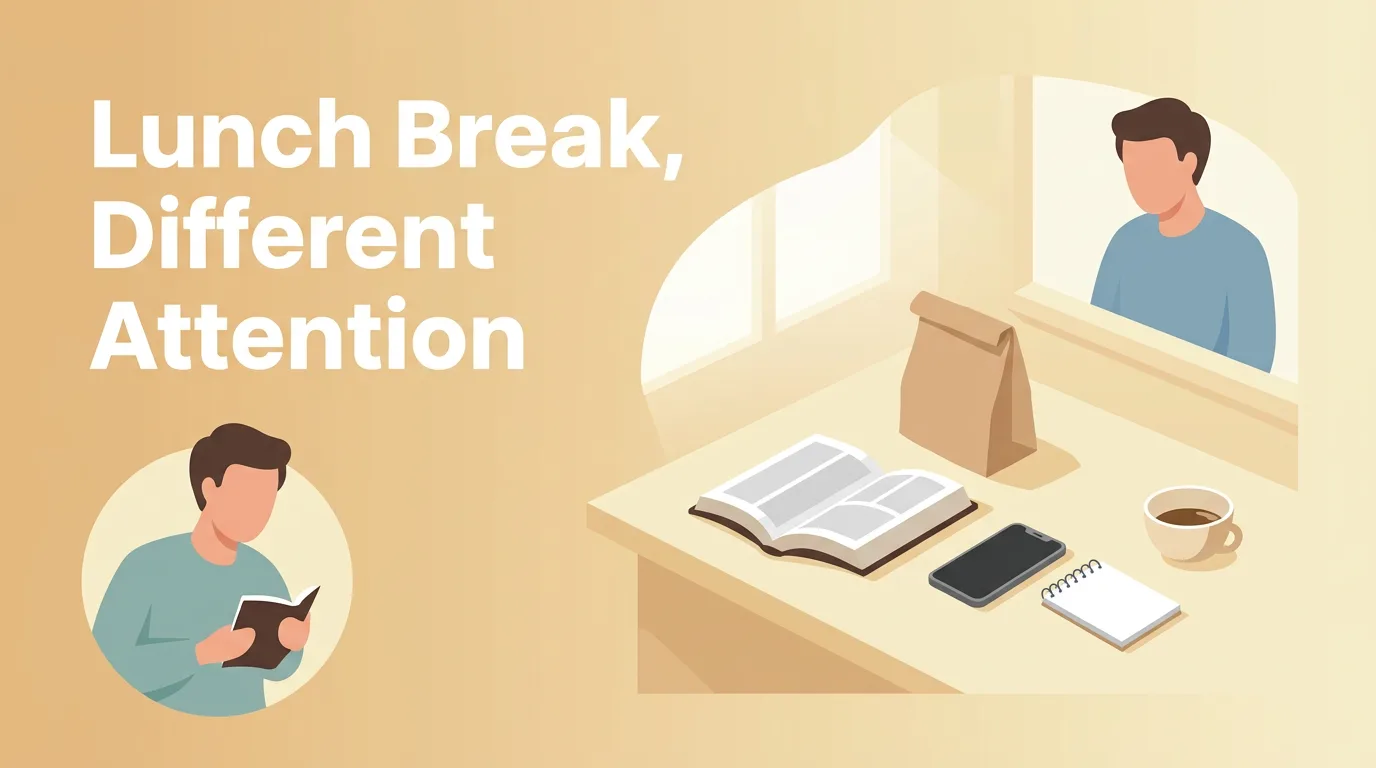
Christian media habits did not change for her in a retreat center or after deleting every app in one dramatic night. They started changing on a Tuesday, in a break room that smelled like reheated leftovers, when she realized she could not remember the last lunch break she had finished without opening Instagram.
She is a composite of many believers in their late twenties and thirties, the kind of person who keeps a Bible by the bed, means to pray in the morning, and still feels the phone like a small magnet in the pocket. She loved God. She was also tired, distracted, and more emotionally frayed than she wanted to admit.
the ordinary place where it became obvious
Her lunch break used to begin with good intentions. Sit down. Eat slowly. Maybe read a psalm. Maybe text her husband back. But almost every day, one notification led to five minutes of scrolling, and five minutes became twenty. By the end, her shoulders were tight, her mind was noisy, and the second half of the workday felt harder than the first.
"Set your minds on things above, not on earthly things." - Colossians 3:2
That verse did not land on her like a rebuke. It felt more like a hand on the shoulder. A gentle question. What exactly had her mind been set on lately? Headlines, reels, group chats, comparisons, and the low-grade anxiety that comes from always being half-available.
what she tried first, and why it did not fully work
She tried the usual fixes. She moved social apps into a folder. She turned off a few notifications. She told herself she would only check at lunch and after dinner. For three days, it seemed manageable. In week two, stress at work rose, and so did the scrolling. That is how christian media habits often feel in real life, less like rebellion and more like drift.
- She reached for her phone when a meeting went badly.
- She opened social media when she felt lonely in a crowded room.
- She told herself short breaks were helping, even when they left her more restless.
- She noticed Bible reading was getting the leftovers of her attention, not the first part of it.
the small turning point
The shift came when she stopped asking, "How do I use my phone less?" and started asking, "What do I do in the first minute of wanting escape?" That question was more honest. It named the real issue. The problem was not only the apps. It was the reflex.
rebuilding prayer in the first minute
She made one rule for lunch breaks. Before any locked app, she would pause for sixty seconds of prayer. Not polished prayer. Not impressive prayer. Just sixty seconds of praise, repent, ask, and yield in plain words. Some days it sounded like, "Lord, I am scattered. I want relief more than I want Your presence. Help me want You again."
At first, the minute felt long. Embarrassingly long. She would stare at her sandwich, hear the vending machine hum, and feel how quickly her mind tried to run. But by the second week, something changed. The pause exposed what the scrolling had been covering. Fatigue. Envy. Boredom. The ache of wanting comfort without stillness.
"You have made us for yourself, O Lord, and our heart is restless until it rests in you." - Augustine, Confessions
the messy middle of weeks two to four
This was not a neat upward line. In week two, she still broke her own plan on a hard Thursday and spent most of lunch numbing out on videos. In week three, she prayed the sixty seconds and still felt tempted afterward. In week four, she noticed something quieter than success. The urge no longer felt invisible. It had become interruptible.
- She started keeping her phone face-down during meals.
- She put a small paper card in her lunch bag with one psalm to read slowly.
- She stopped treating missed days as proof that nothing was changing.
- She measured progress by honesty and return, not perfection.
what christian media habits looked like after a month
After a month, her life was not suddenly serene. She still had deadlines. She still had lonely moments. She still liked knowing what friends were doing. But christian media habits had become more deliberate. Lunch was no longer automatic surrender to the loudest app. Sometimes she prayed and then chose not to open the app at all. Sometimes she opened it with more clarity and left sooner. Both felt different from compulsion.
More surprising, her evening prayer life improved because lunch had changed. The midday pause made prayer feel less like a dramatic rescue at the end of a bad day and more like a thread running through ordinary hours. She was learning that attention can be retrained in very small rooms.
Try a gentle prayer-first pause
If your phone keeps taking the first minute of every vulnerable moment, Prayin can help you practice a different reflex. Lock distracting apps and place a simple 60-second prayer before the scroll.
Install Prayinpractical habits that helped her keep going
- Choose one recurring moment, like lunch, the school pickup line, or bedtime, and protect that window first.
- Lock only the apps that usually lead to mindless drift. Start small so the habit can stick.
- Keep one short passage nearby, such as Psalm 23 or Matthew 11:28-30, for the minute before you scroll.
- When you fail, name what happened without drama. Tired, stressed, bored, lonely. Then begin again.
- Let prayer be simple and concrete. Thank God for one thing, confess one distraction, ask for one grace, surrender one next step.
This story does not promise a perfect ending because most people do not get one. It offers something steadier. A believable change in an ordinary place, through repeated pauses, honest prayer, and a phone that no longer gets every first yes. It is an illustrative story, drawn from common patterns.
Frequently asked
How can Christians build healthier media habits?
Start with one vulnerable moment each day and add a short prayer pause before opening distracting apps. Small, repeatable changes usually last longer than dramatic resets.
Can prayer really help with phone distraction?
Yes. Prayer slows the reflex to escape and helps name what is happening underneath the urge to scroll, such as stress, boredom, or loneliness.
What is a realistic first step for changing christian media habits?
Pick one app and one time of day, then put a 60-second barrier of prayer before it. Keep the goal modest so it becomes a habit.
Do I need to delete social media completely?
Not always. Some people need a full break for a season, while others benefit from stronger boundaries and intentional use.
Start your trial
The apps that pull at you stay quiet until you pray. Christian screen-time, built on Apple Family Controls.
Install Prayin Lock