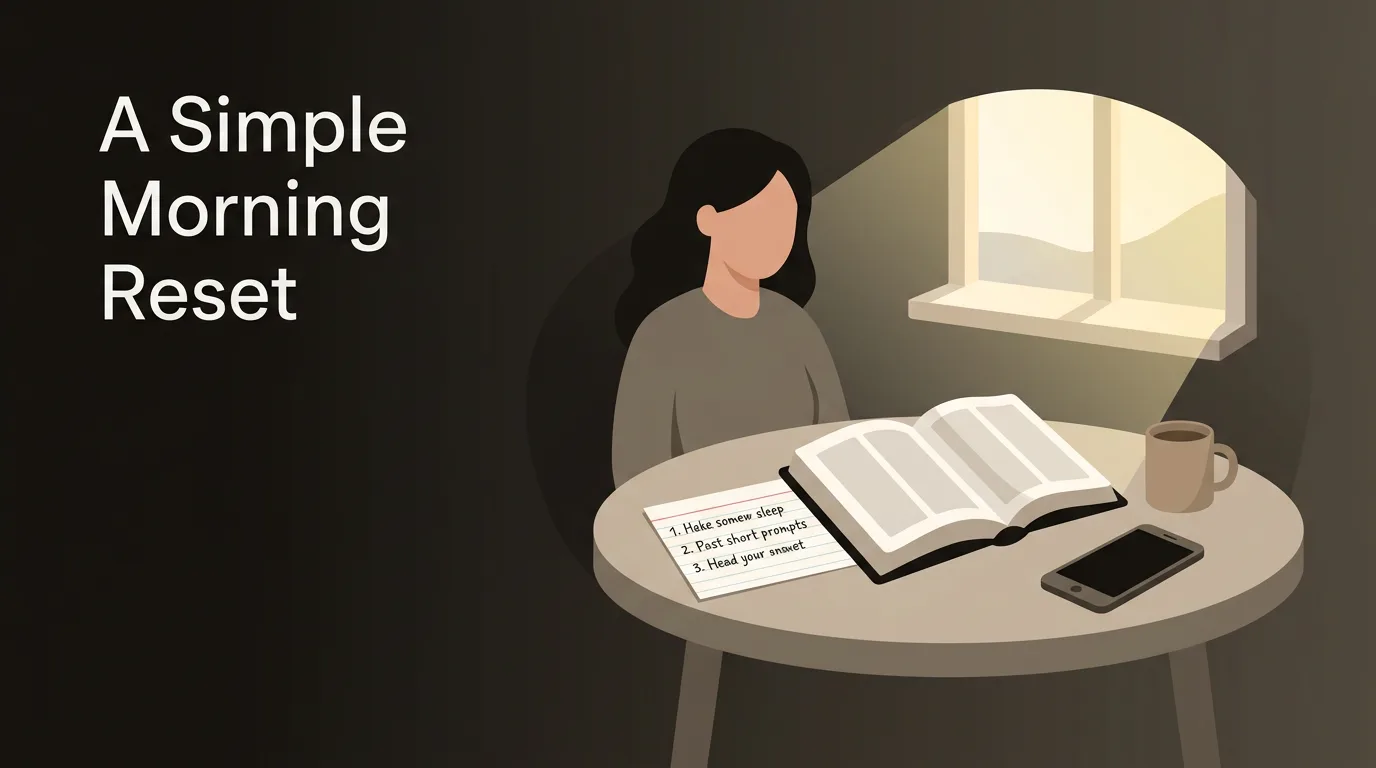
Bible Margin Notes Method for Better Bible Reading Consistency
The Bible margin notes method can improve Bible reading consistency when plans keep failing. Try one simple way to stay present, reduce decision fatigue, and keep showing up.

Bible margin notes can be a surprisingly practical answer when your Bible time keeps stalling. If you have started strong, lost momentum, and quietly avoided trying again, one small writing habit can help you slow down, notice more, and return tomorrow without pressure.
Why this tactic works when other methods keep collapsing
A lot of Christians do not quit because they do not love God's word. They quit because of decision fatigue, boredom, guilt, and the feeling that every reading session needs a perfect plan. Bible margin notes lower the pressure. You are not trying to complete a large system. You are simply leaving a small trace of attention on the page.
- Write one question in the margin
- Circle one repeated word
- Underline one phrase that unsettles or comforts you
- Add one short prayer beside the passage
- Date the page so you can see your return over time
The 5-minute Bible margin notes method
This is not a full academic study method. It is a repeatable starter rhythm for ordinary days. Open your Bible, read a short passage, and make only one to three notes. Stop before you get tired of it. The goal is not volume. The goal is bible reading consistency through a low-friction practice you can repeat tomorrow.
Step 1: choose a small passage
Pick a Psalm, a paragraph from a Gospel, or a short section from one epistle. If you keep abandoning long systems, avoid big catch-up goals. Small passages protect your attention and make daily Bible study feel possible again, even if you only have a few calm minutes.
Step 2: leave a note that proves you were there
Your note can be simple: 'Why this command here?', 'This sounds like fear', 'Jesus notices outsiders', or 'Lord, help me trust you today.' The point of Bible margin notes is not impressive insight. It is engagement. A brief note keeps your mind from drifting and helps build a durable scripture habit.
"Your word is a lamp to my feet and a light to my path." - Psalm 119:105
Step 3: end with one sentence of prayer
Turn what you noticed into prayer. If the passage exposes impatience, confess it. If it shows God's care, thank him. If it gives a command, ask for help obeying it. This keeps your reading from becoming only observation. It becomes response.
What to write in your Bible margin notes
If staring at the page makes you freeze, use four prompts on repeat. They are enough to create bible focus without needing a complicated notebook system.
- What does this show about God?
- What does this reveal about people?
- What word or phrase stands out?
- What should I pray or do today?
You do not need to answer every prompt every time. One honest note is enough. This is how Bible margin notes support bible reading consistency for people who usually stop when a method becomes too heavy.
Need help putting your phone in its place?
If your best intentions disappear the moment you reach for Instagram or YouTube, Prayin can help. Lock distracting apps behind a 60-second prayer so your attention has a chance to settle before you scroll.
Install PrayinCommon reasons this habit fails, and how to keep it gentle
"I feel behind already"
Then do not catch up. Read today's small passage and write today's small note. Shame is one of the fastest ways to abandon a habit. Start where you are.
"I get bored fast"
Boredom often means your reading is passive. A pen gives your attention a job. Mark repeated words, contrasts, commands, promises, and questions. Interaction helps more than forcing longer sessions.
"My phone steals the moment"
Put your phone face-down in another spot before you open your Bible. Better yet, create a tiny cue: Bible, pen, chair, water. Keep the setup identical so your body learns the pattern before your feelings do.
A realistic weekly rhythm
Try this for two weeks: read five days a week, one short passage per day, one to three notes per session, and one sentence of prayer at the end. On the sixth day, reread one marked passage. On the seventh, rest or attend church without trying to optimize everything. This kind of modest structure often lasts longer than ambitious systems.
When you miss days
Do not restart with a harder promise. Return with the same small method. Open the next passage, leave one note, pray one sentence. Growth usually looks less like intensity and more like quiet return.
Frequently asked
How do Bible margin notes help with consistency?
They give you a simple action during reading, which reduces drifting and lowers the pressure of complicated study systems.
What if I do not want to write in my Bible?
Use a sticky note, index card, or notebook and keep the same one-note method. The tactic still works.
How long should this method take each day?
About 5 to 10 minutes is enough for most days. The goal is a repeatable rhythm, not a long session.
Is this the same as Bible journaling?
Not exactly. Bible margin notes are usually shorter and more functional, focused on attention, questions, and prayer.
Start your trial
The apps that pull at you stay quiet until you pray. Christian screen-time, built on Apple Family Controls.
Install Prayin Lock