Attention Training for Christians: Scripture Recall in a Scroll-Saturated Age
Scripture recall can be learned even in a scroll-saturated age. Build a gentle system with spaced review, audio habits, family rhythms, and prayerful phone boundaries.
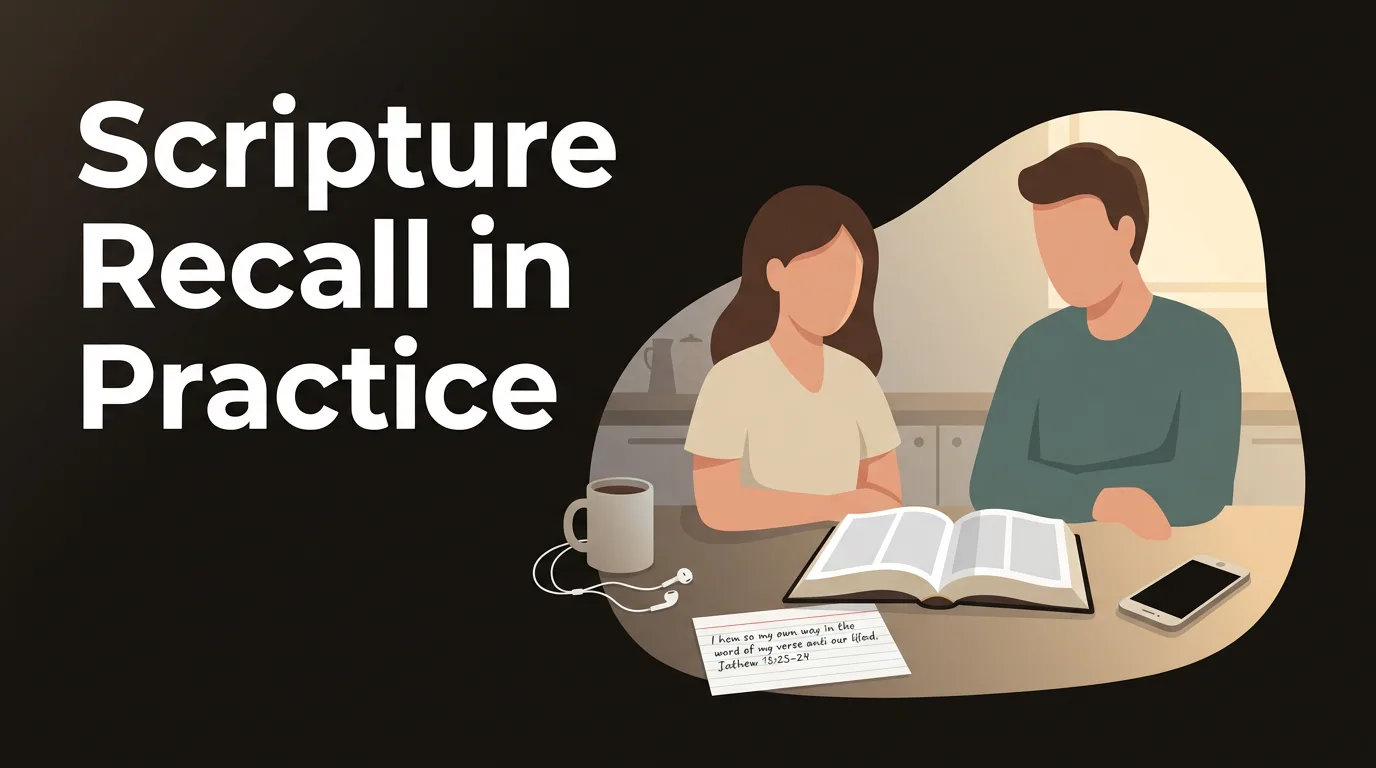
If scripture recall feels harder than it should, you are not alone. Many Christians are not lazy or unserious. We are simply trying to remember holy words with minds that have been trained by speed, novelty, and constant interruption.
The good news is that attention can be retrained. You do not need a perfect memory or a more intense personality. You need a simple structure that helps the verse stay with you long enough to become familiar, meaningful, and usable in prayer, temptation, and conversation.
why scrolling changes the way we remember
Scrolling teaches the brain to sample, not to stay. It rewards quick recognition rather than deep retrieval. That matters because remembering Scripture is not mainly about seeing a verse often. It is about bringing it back without looking, then returning to it over time.
"I have stored up your word in my heart, that I might not sin against you. - Psalm 119:11"
Notice the inward language of the verse. Scripture stored in the heart is available when the phone is gone, when temptation is sudden, and when someone needs comfort right now.
a five-part system for scripture recall
1. choose fewer verses than you think
Start with one short passage for two weeks. A single verse, or two connected verses, is enough. Most people fail because they collect too much material and review too little. Depth beats volume.
2. use spaced repetition on purpose
A verse is easier to keep when you review it at widening intervals. Try this pattern: day 1, day 2, day 4, day 7, day 14. Speak the verse from memory before you check it. That effort is what strengthens recall.
- Write the verse by hand once on the first day.
- Recite it out loud twice without looking.
- Review it during short gaps, such as waiting in the car line or making coffee.
- If you miss a day, restart the interval without shame.
3. attach the verse to a place
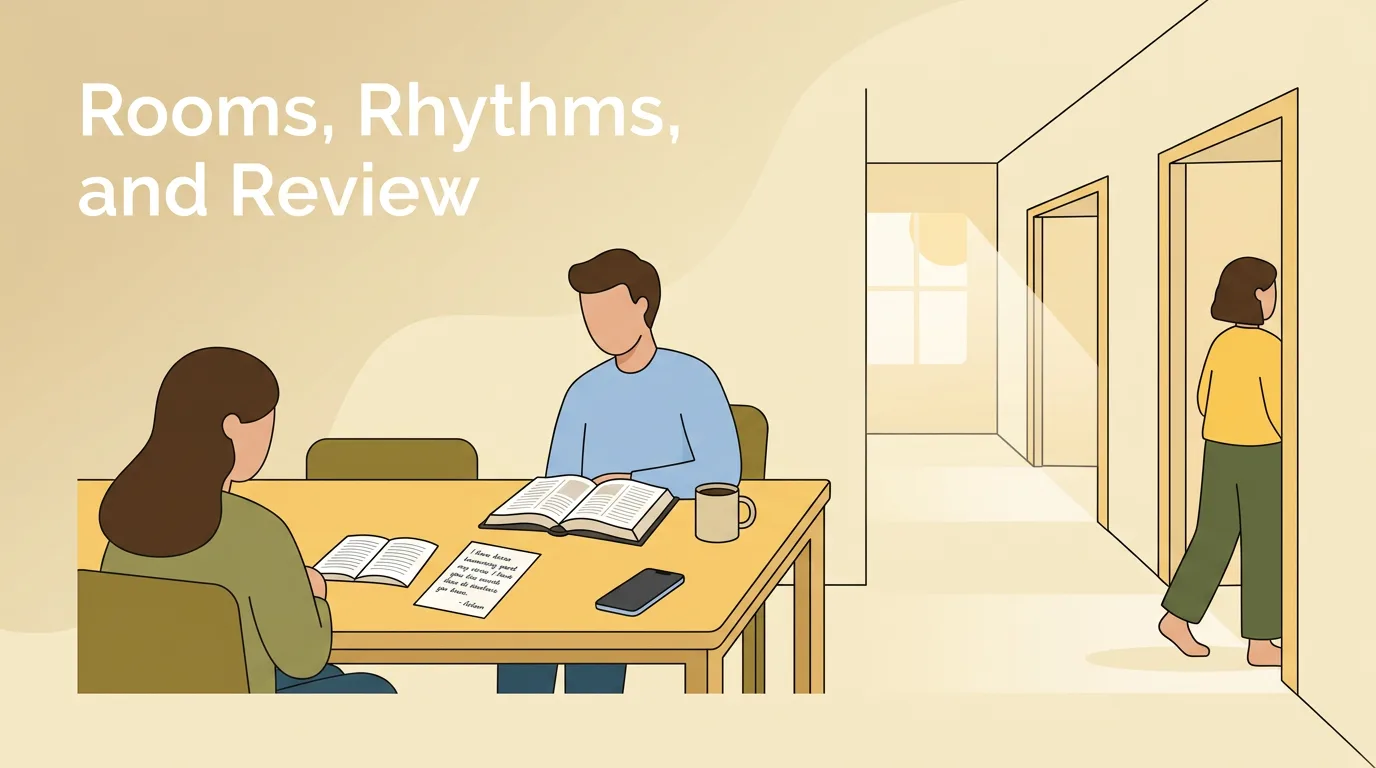
A simple memory palace can help ordinary believers, not just memory competitors. Place one phrase of the verse in each familiar location in your home. Front door, sink, couch, desk. As you walk through the house, let the locations cue the wording in order.
4. make it audio-first
Many people remember better through the ear than the eye. Record yourself reading the verse slowly, then leave pauses for repetition. Listen on a walk, while folding laundry, or during school pickup. Audio review is especially helpful when attention feels tired.
5. say it to another person
Accountability works best when it is warm and specific. Text one friend every Friday with the verse you are learning, then send a voice note reciting it. Families can do the same around dinner or bedtime, one verse at a time.
a practical rhythm for families and small groups
If you lead children, students, or a small group, keep the rhythm light enough to survive real life. Pick one church-season verse for the month. Repeat it in the same moments each week so the setting becomes part of the cue.
- Monday breakfast - read the verse together once.
- Wednesday car ride - play the audio and pause for repetition.
- Friday dinner - let each person say one phrase.
- Sunday after church - connect the verse to the sermon or prayer requests.
This kind of repetition forms more than memory. It creates a shared language for repentance, comfort, and encouragement in the home.
what to do when your phone keeps stealing the moment
A verse card helps, but many of us lose the battle before we begin because the phone interrupts the quiet needed for review. If your reflex is to open Instagram, games, or news every time attention softens, put a prayerful speed bump in front of the habit.
try a gentler phone boundary
Prayin helps you lock distracting apps behind a 60-second prayer, so the moment that usually disappears into scrolling can become a moment of recollection, confession, or Scripture review instead.
Install PrayinThat one minute can become a small liturgy. You pause, pray, remember your verse, and then decide whether you still need the app.
one technique to try today
Use the look-say-check-walk method. Look at the verse once. Say it aloud from memory. Check what you missed. Then walk through one familiar room and attach each phrase to an object. This combines writing, repetition, movement, and location cues in less than five minutes.
gentle expectations make stronger habits
Do not measure faithfulness by how many verses you can perform on command. Measure it by whether the Word is becoming more available to your thoughts, prayers, and choices. Scripture recall grows slowly, like most deep Christian work.
You are not trying to outsmart a distracted age with willpower alone. You are learning to return, again and again, to the words that return you to God.
Frequently asked
How do I remember Bible verses if I get distracted easily?
Use short passages, review them at spaced intervals, and recite out loud before checking the text. Audio review and location cues also help distracted minds.
What is the best spaced repetition schedule for Bible verses?
A simple pattern is day 1, day 2, day 4, day 7, and day 14. If the verse is still weak, keep reviewing weekly.
Can families memorize Scripture without making it stressful?
Yes. Choose one verse for a week or month and repeat it in ordinary moments like meals, car rides, and bedtime prayer.
Does listening help with Scripture memory?
For many people, yes. Recording the verse and repeating it during daily routines can improve recall when visual attention is tired.
Start your trial
The apps that pull at you stay quiet until you pray. Christian screen-time, built on Apple Family Controls.
Install Prayin Lock