App Fast Testimony from a Young Dad Who Locked His Phone at 9 P.M.
This app fast testimony follows a young father through weeks 2 to 4 of locking his phone at night, stumbling through a social reset, and slowly rebuilding prayer at home.
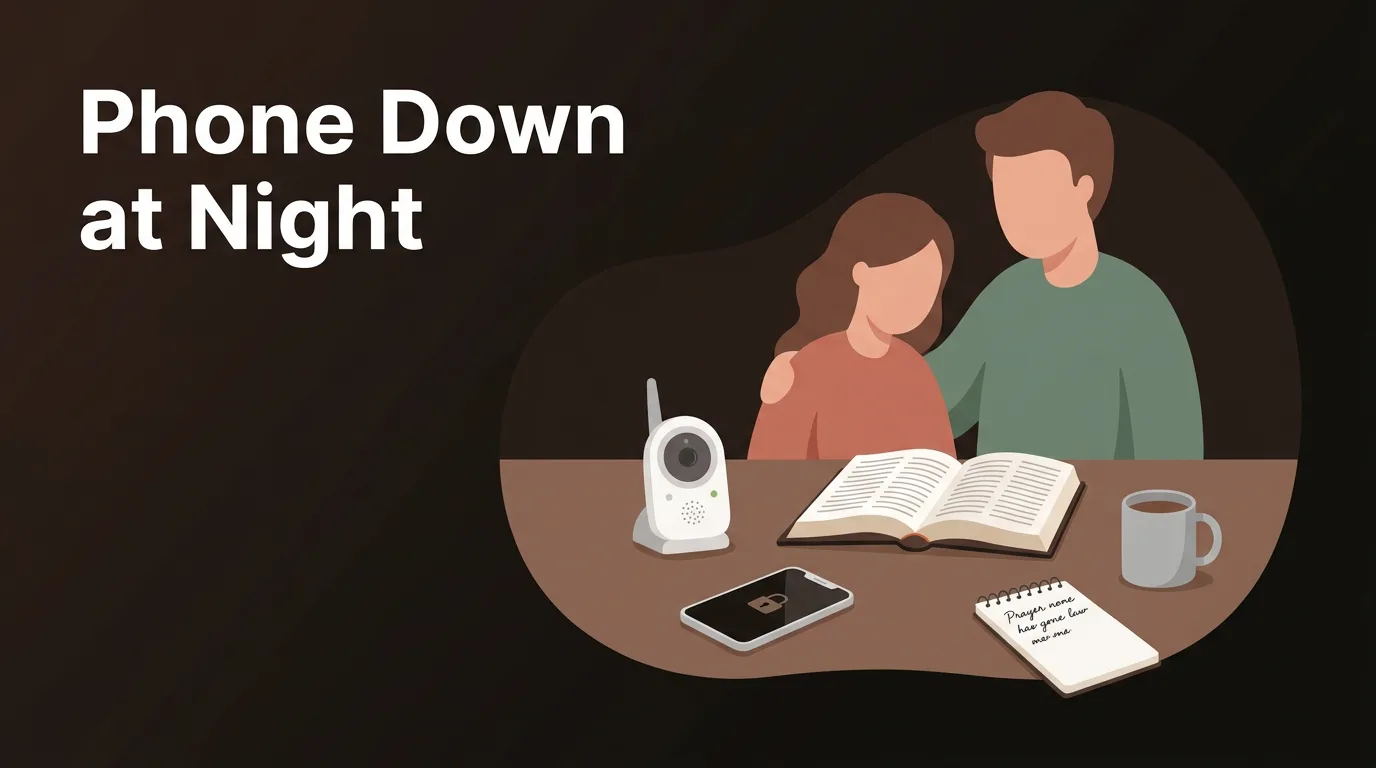
This app fast testimony is about a father named Eli, a composite of common stories, who noticed that every night his phone stayed bright long after the house had gone quiet. He did not think of himself as addicted. He just kept reaching, checking, swiping, and telling himself he deserved ten more minutes.
When the house finally got quiet
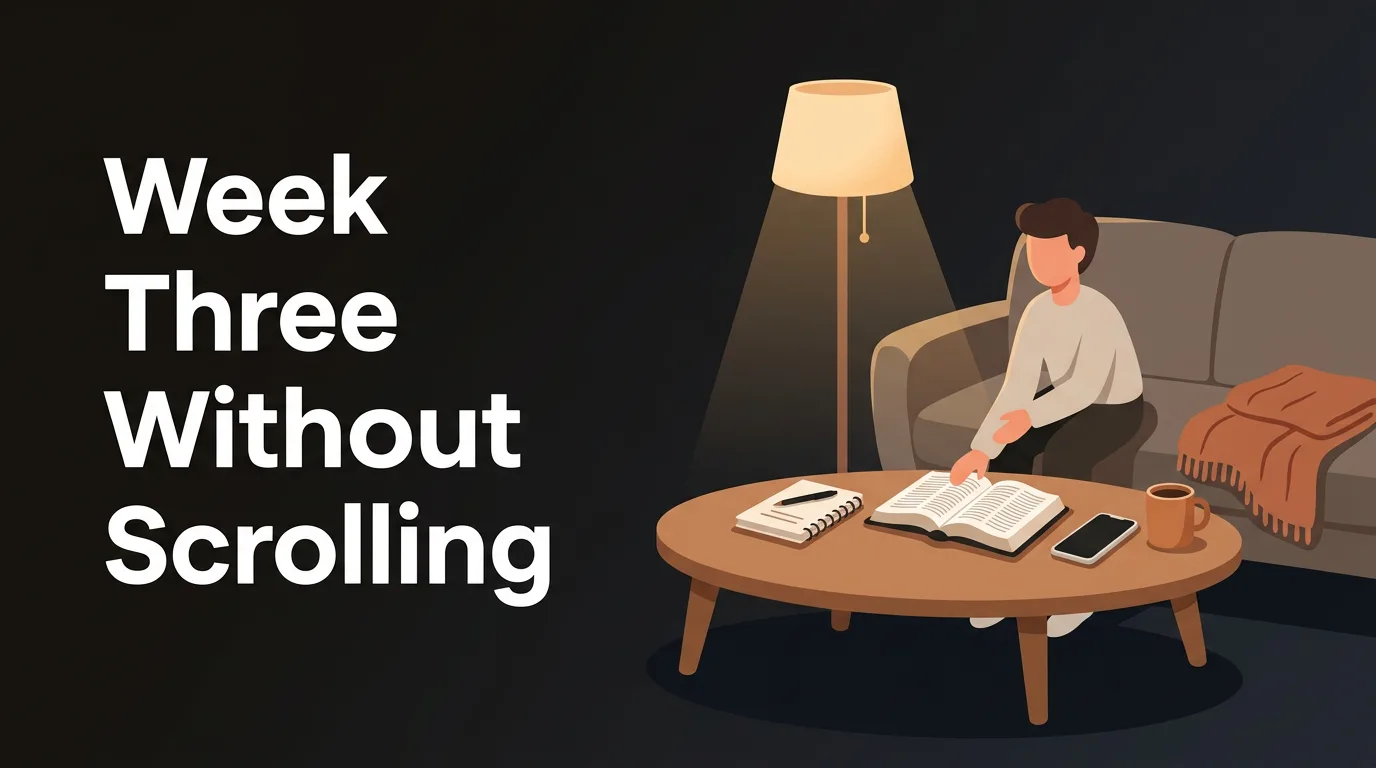
By 9:07 p.m., the toys were mostly in a basket, the dishes were drying, and his wife had already asked one ordinary question twice. "Are you listening?" The phone felt warm in his palm, almost friendly. A sports clip led to a group chat, then to Instagram, then to news, then back to nothing he could remember five minutes later.
What bothered him was not only the lost time. It was the strange split in him. He wanted to be present, but he was elsewhere. He wanted to pray before bed, but his mind arrived noisy and thin.
"Teach us to number our days that we may gain a heart of wisdom." - Psalm 90:12
The decision was smaller than a dramatic reset
He did not delete every app in one burst of conviction. He chose a narrower change. He locked the apps that kept swallowing the evening, especially Instagram, YouTube, and a sports app, after 9 p.m. If he wanted back in, he had to spend 60 seconds praying first.
Why the lock helped
- It slowed the reflex before it became another half hour.
- It made the moment visible. He had to admit, "I am about to disappear into my phone again."
- It gave prayer a doorway instead of treating prayer like the thing he would get to later.
Try a gentler kind of phone boundary
If your evenings keep slipping away, Prayin can lock distracting apps until you pray for 60 seconds. It is private, quiet, and built for Christians who want a practical pause.
Install PrayinWeeks 2 to 4 were the real story
The first few nights felt almost inspiring. Then the irritation showed up. Week 2 was full of little negotiations. He would pick up the phone without thinking, hit the lock, sigh, put it down, then circle back ten minutes later. He was not failing exactly, but he was seeing how automatic the habit had become.
That is where this app fast testimony turns honest. The problem was not just an app. It was fatigue, low-grade anxiety, and the need to feel briefly off-duty. The phone had become his fastest form of relief.
What changed in the messy middle
- He moved the charger out of the bedroom and left the phone in the kitchen.
- He kept a paper list near the counter for anything he felt afraid to forget.
- He prayed one sentence when the lock appeared: "Lord, I want comfort, but I want Your peace more."
- He let the first ten minutes after the kids' bedtime stay empty, without filling them immediately.
This is what screen time recovery looked like for him. Not dramatic silence. Not instant holiness. Just repeated returns. Some nights he still unlocked the apps after praying. But even then, the prayer interrupted the trance. He was no longer scrolling all the way asleep.
How prayer began to feel less forced
Before this, he thought rebuilding prayer would require a better personality, more discipline, maybe a different season of life. Instead, it began in scraps. Sixty seconds in the kitchen. A whispered confession while the kettle warmed. A short prayer for his wife before walking back into the living room.
His christian phone testimony was not that he suddenly loved long devotional routines. It was that prayer became more available because the phone became less available.
"You have made us for yourself, O Lord, and our heart is restless until it rests in you." - Augustine, Confessions
Three habits that stayed
- A closing hour - he treated 9 to 10 p.m. as the last hour of the day, not bonus time for endless input.
- A visible Bible - he left it open on the table, not as decoration, but as the next easy thing to reach for.
- A short examen - where was I present today, where did I hide, what do I need to hand back to God?
What this kind of fast is really uncovering
People often expect an app fast testimony to end with a clean before-and-after. Real life rarely does. Eli still had nights when he wanted numbness more than prayer. He still had stretches where work stress pulled him back toward old loops. But now he could name what was happening sooner.
That naming mattered. A lock on the phone did not solve his soul. It did expose the places where he was tired, lonely, distracted, and hungry for relief. In that sense, his small fast from evening scrolling became a kind of examen. It showed him what he reached for first.
If your evenings feel similar
If this story sounds familiar, start with one specific window instead of remaking your whole life by Friday. Pick one time, one room, and two or three apps. Let the boundary be clear enough to feel. Let prayer meet you there, even if it is brief and unpolished.
- Choose a daily lock time that matches your real weak spot.
- Name the apps that pull you out of presence most quickly.
- Prepare a replacement for your hands, a book, a journal, tea, a short walk to check the door.
- Use one repeated prayer so you do not have to invent words every night.
This app fast testimony is illustrative, drawn from common patterns in ordinary Christian life, where change usually comes through small, repeated interruptions rather than one dramatic victory.
Frequently asked
What is an app fast testimony?
It is a personal story about stepping back from distracting apps and noticing what changes in attention, prayer, and daily life.
Can a Christian social media fast help rebuild prayer?
Yes, especially when the fast creates a concrete pause before opening an app. That pause often becomes a realistic place to pray.
What does screen time recovery look like for Christians?
Usually it looks gradual. A few locked apps, one vulnerable time of day, simple prayer, and steady adjustments work better than dramatic plans.
How can I lock my phone apps and pray first?
Tools like Prayin let you lock selected apps and require a short prayer before access, creating a practical interruption without shame.
Start your trial
The apps that pull at you stay quiet until you pray. Christian screen-time, built on Apple Family Controls.
Install Prayin Lock