Anxious Thoughts Bible Habits for a Quieter Mind
Anxious thoughts Bible habits can help when phone overuse fuels comparison, fear of missing out, and rumination. Learn practical rhythms, peace verses, and gentle prayer.
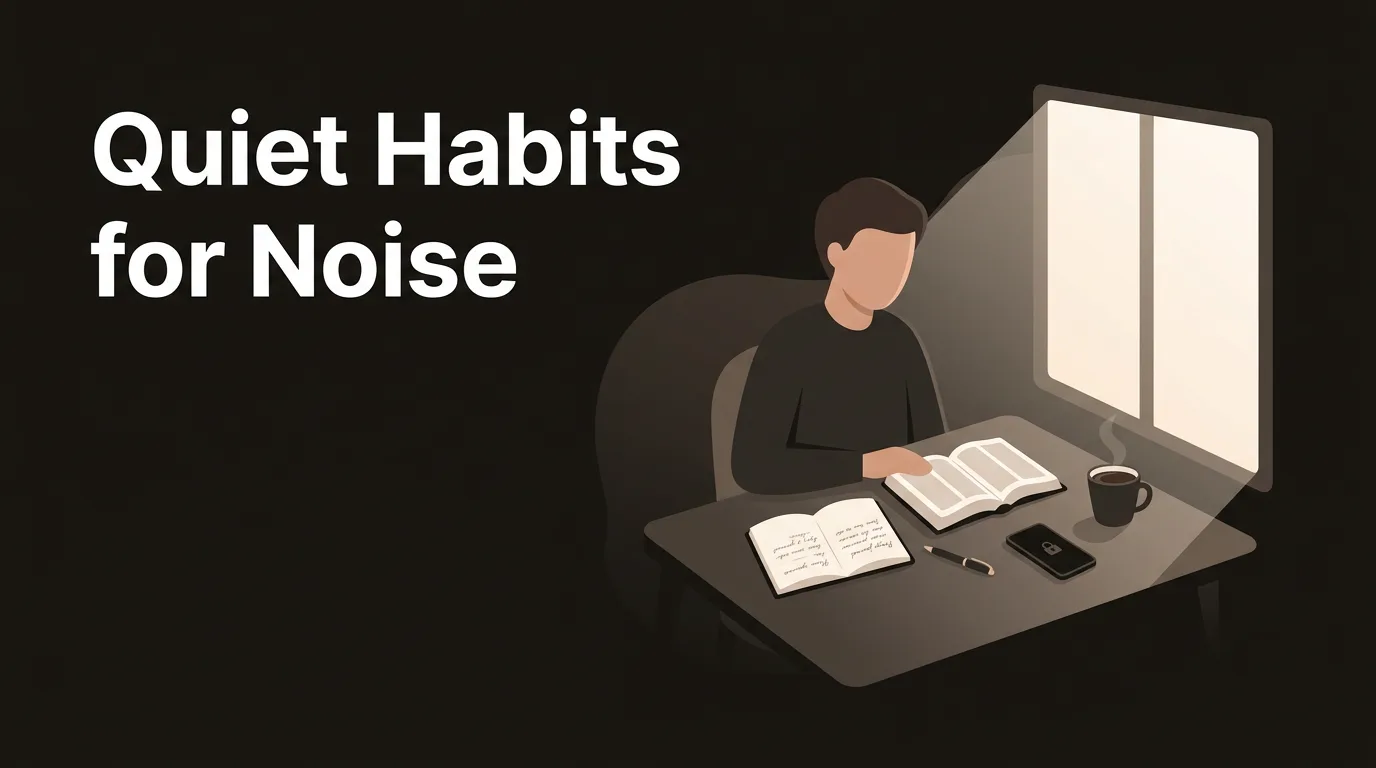
If you have searched for anxious thoughts bible help, you may already know the feeling: you pick up your phone for one small thing, and ten minutes later your chest is tight, your mind is noisy, and your heart feels far from rest. For many people, phones do not create all anxiety, but they can intensify it through comparison, constant alerts, fear of missing out, and endless rumination.
It is important to say this clearly: anxiety is a real medical and emotional experience. Some people benefit from therapy, counseling, medication, better sleep, or care from a doctor, and that is not a failure of faith. Prayer and Scripture are not a way to deny that reality. They are a way to bring your whole self, honestly, before God while you also receive wise help.
Why your phone can amplify anxious thoughts
Your phone is not only a tool. It is also an environment. It trains your attention, shapes your pace, and keeps unfinished concerns within reach. When that environment is crowded, anxiety phone patterns can become very predictable: you check, compare, spiral, and then check again.
- Comparison tells you everyone else is ahead, happier, thinner, holier, or more secure than you.
- Fear of missing out keeps your mind on what you might be missing instead of the grace in front of you.
- Rumination turns one hard thought into a loop. You replay conversations, headlines, and imagined futures.
- Constant stimulation leaves little room for silence, which means your nervous system rarely settles.
- Late-night scrolling often weakens sleep, and poor sleep can make anxious thoughts louder the next day.
"You keep him in perfect peace whose mind is stayed on you, because he trusts in you." - Isaiah 26:3
What Scripture says about a noisy mind
The Bible does not shame people for being troubled. It speaks to fear, distress, sleeplessness, sorrow, and inner turmoil with remarkable honesty. The invitation of Scripture is not "pretend you are fine." It is "bring your mind to God, again and again." That is why anxious thoughts bible reading is most helpful when it becomes a steady practice, not just an emergency search.
Peace verses to return to slowly
- "Do not be anxious about anything, but in everything by prayer and supplication with thanksgiving let your requests be made known to God." - Philippians 4:6-7
- "When I am afraid, I put my trust in you." - Psalm 56:3
- "Cast your burden on the Lord, and he will sustain you." - Psalm 55:22
- "Come to me, all who labor and are heavy laden, and I will give you rest." - Matthew 11:28
- "Be still, and know that I am God." - Psalm 46:10
These peace verses are not magic formulas. They are places to stand when your thoughts keep moving. Read one verse aloud. Write it down. Breathe slowly. Repeat it before you open the app that usually starts the spiral.
A practical prayer pattern for phone-fueled anxiety
When your mind is racing, long prayers can feel impossible. Use a short structure. One gentle pattern is praise, repent, ask, yield.
- Praise: "Lord, you are near even when I feel scattered."
- Repent: "I confess I have looked to my phone for comfort more than to you."
- Ask: "Please quiet my body and mind. Help me walk in wisdom today."
- Yield: "I release what I cannot control. Lead my attention where it should go."
This kind of prayer does not erase all distress at once. But it interrupts the reflex that says, "I feel bad, so I scroll." Over time, it can retrain that moment. That matters for mental health christian care because habits shape the conditions in which your mind lives.
Try a prayer before opening the app
Prayin helps you place a gentle pause between impulse and screen. Lock distracting apps, pray for 60 seconds, and let Scripture meet your attention before the scroll begins.
Install PrayinFive habits that quiet an anxious mind
1. Make your first minutes phone-free
If possible, keep the first 10 to 15 minutes of the day free from social media and news. Sit up, drink water, read one Psalm, and name what you are carrying. An anxiety phone habit often starts before your feet touch the floor.
2. Put one verse where your thumb usually goes
Place a note on your lock screen, home screen, or phone case with one of your peace verses. Make the interruption visible. Let Scripture meet muscle memory.
3. Notice your comparison triggers
Write down the accounts, topics, or times of day that most often lead to envy or panic. Then reduce access. Unfollow, mute, log out, or add an app block. Wisdom is not weakness. It is stewardship.
4. Give rumination a boundary
When thoughts loop, set a timer for five minutes and write the worry down. Then ask, "Is there one faithful action I can take?" If yes, do it. If no, turn it into prayer. This is one way to respond to phone induced anxiety without feeding the cycle.
5. End the day with a smaller world
Try a simple evening rule: no social feeds in bed. Read a Gospel paragraph, a Psalm, or a few pages of a wise book instead. Many people find that anxious thoughts bible reading at night slows the mind better than one more check of the phone.
For parents and caregivers of anxious teens
If you are caring for a teenager, lead with curiosity before control. Ask, "What kinds of content make your body feel worse?" and "When do you notice your mind getting loud?" Build small phone boundaries together. Shame usually drives hiding. Gentle structure builds trust.
You can also model this yourself. Let your teen see you put your phone away, pray briefly, and choose presence. A calm adult habit says more than a long lecture.
When to seek more support
If anxiety is affecting sleep, school, work, eating, relationships, or daily functioning, it may be time to talk with a pastor, counselor, therapist, or doctor. If you feel overwhelmed for long stretches, or if your thoughts become dark or unsafe, seek immediate professional help. Faith and treatment can belong together.
Frequently asked
What does the Bible say about anxious thoughts?
The Bible speaks honestly about fear and troubled hearts, then invites us to bring our concerns to God in prayer and trust. Passages like Philippians 4:6-7 and Psalm 56:3 are often helpful starting points.
Can phone overuse make anxiety worse?
Yes, for many people phone overuse can amplify anxiety through comparison, constant alerts, poor sleep, and rumination. It may not be the only cause, but it can be a strong contributor.
What are good peace verses for anxiety?
Many Christians return to Philippians 4:6-7, Isaiah 26:3, Psalm 46:10, Psalm 55:22, and Matthew 11:28. Read them slowly and repeatedly rather than rushing through them.
Is prayer enough for anxiety?
Prayer is vital, but it is not the only form of care. Many people also benefit from therapy, counseling, medication, better sleep, and practical changes to phone habits.
Start your trial
The apps that pull at you stay quiet until you pray. Christian screen-time, built on Apple Family Controls.
Install Prayin Lock