Tech Sabbath for Parents: A Christian Rule for the After-School Hour
A practical guide to a tech sabbath during the after-school hour, helping Christian parents protect attention, lower reactivity, and make space for prayer and presence.
A tech sabbath does not have to mean a full day offline to be real. For many Christian parents, the most strategic place to begin is the hour after school, when everyone is tired, hungry, and vulnerable to drifting into separate screens instead of shared presence.
Why the after-school hour matters
This small window often shapes the emotional temperature of the whole evening. If a parent reaches for a phone while a child unloads their day, distraction becomes the atmosphere. If the home holds a simple tech sabbath for that hour, attention becomes a form of love.
"Let your reasonableness be known to everyone. The Lord is at hand; do not be anxious about anything. - Philippians 4:5-6"
A household rule that is simple enough to keep
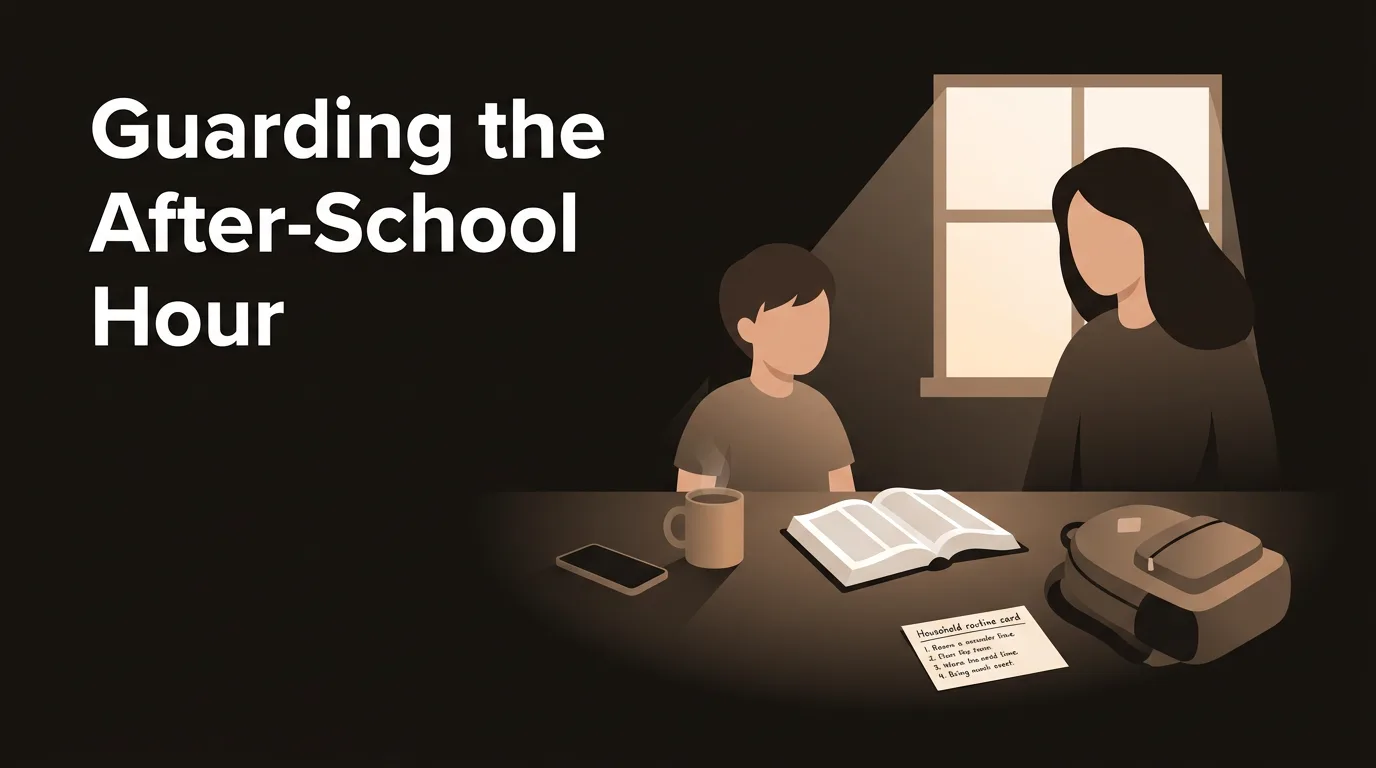
Try this rule: when the first child walks in, all adults place their phones in one visible spot until snacks are served, bags are unpacked, and the first conversation of the day has happened. This is not about perfection. It is about giving your home one protected hour of intentional attention.
- Choose one place for phones, such as a kitchen shelf or entry table.
- Set the boundary by event, not by a strict minute count.
- Keep the rule visible on a handwritten card so no one has to renegotiate it daily.
- Begin with weekdays only, for two weeks.
What this rule interrupts
It interrupts the reflex to self-medicate with scrolling when you are depleted. It also interrupts the subtle message that the loudest device gets the first claim on the family. A small tech sabbath can expose how often the phone has become a buffer against ordinary stress.
Grounding the habit in scripture
Scripture treats attention as moral, relational, and deeply practical. In James 1:19, believers are told to be "quick to hear, slow to speak, slow to anger." Phones make that harder. When every notification trains quick reaction, patient listening becomes costly.
You do not need a dramatic life overhaul to obey that verse more faithfully. You may simply need a room where the phone is not in your hand while your child is talking.
A short prayer for the transition
When you set your phone down, pray: "Lord, teach me to receive the people in front of me with a steady mind and an open heart. Help me notice before I react." That prayer is small, but it retrains the moment.
Need help keeping the boundary?
Prayin lets you lock distracting apps behind a 60-second prayer, so your phone stops asking for immediate attention when your family needs you most.
Install PrayinHow to make a tech sabbath realistic
- Lower the bar. Protect one hour, not the entire evening.
- Prepare for friction. The first few days may feel awkward if everyone is used to separate screens.
- Pair the rule with something concrete, like fruit on the table, tea, or a short walk with the dog.
- If you fail one day, restart the next day without speeches or shame.
This is where many people quit. They expect a new household rule to feel inspiring. Usually it feels inconvenient first. That does not mean it is failing. It may mean you have finally touched a real dependency.
What changes over time
Over time, a tech sabbath in the after-school hour can make the home less reactive. You may notice fewer fragmented conversations, less background tension, and more awareness of what your children are actually carrying into the house. The point is not a cleaner image of family life. The point is love with attention attached.
Frequently asked
What is a tech sabbath for Christian families?
A tech sabbath is a set time when devices are put away to make space for rest, prayer, and presence. It can be a single hour, not only a full day.
How can I reduce phone use when my kids get home from school?
Create one visible phone-drop spot and keep devices there until the first household transition is complete, like snack time or unpacking bags.
What Bible verse helps with phone distraction?
James 1:19 is a strong starting point because it calls believers to patient listening and slower reactions, both of which phone habits can weaken.
Do I need to delete apps to build better phone habits?
Not always. Many people do better with clear limits, app locks, and a simple household rule than with dramatic all-or-nothing changes.
Start your trial
The apps that pull at you stay quiet until you pray. Christian screen-time, built on Apple Family Controls.
Install Prayin Lock