A Prayer Chair Plan for a Consistent Sunrise Prayer Routine
A sunrise prayer routine can help you keep showing up after the alarm, even when your phone is calling. Try a simple chair-based plan for a steadier, gentler start.
A sunrise prayer routine does not need to be impressive to be real. It just needs to survive ordinary mornings, the alarm, the fog, and that nearly automatic reach for your phone. If you have started strong and faded by week two, you are not strange or lazy. You are human, and you probably need fewer ideals and better anchors.
Why motivation fades so fast
Most people try to build morning prayer on motivation alone. But motivation is usually weakest at the exact moment you need it most. You wake up disoriented, your body wants comfort, and your mind wants quick stimulation. That is why a christian morning routine has to be built from cues, friction, and repetition, not just good intentions.
- If your phone is within reach, you will probably reach for it.
- If your prayer plan is too long, you will delay it.
- If your place changes every day, your brain has no clear signal.
- If you miss one day and call it failure, you will often miss three more.
Start with one physical place
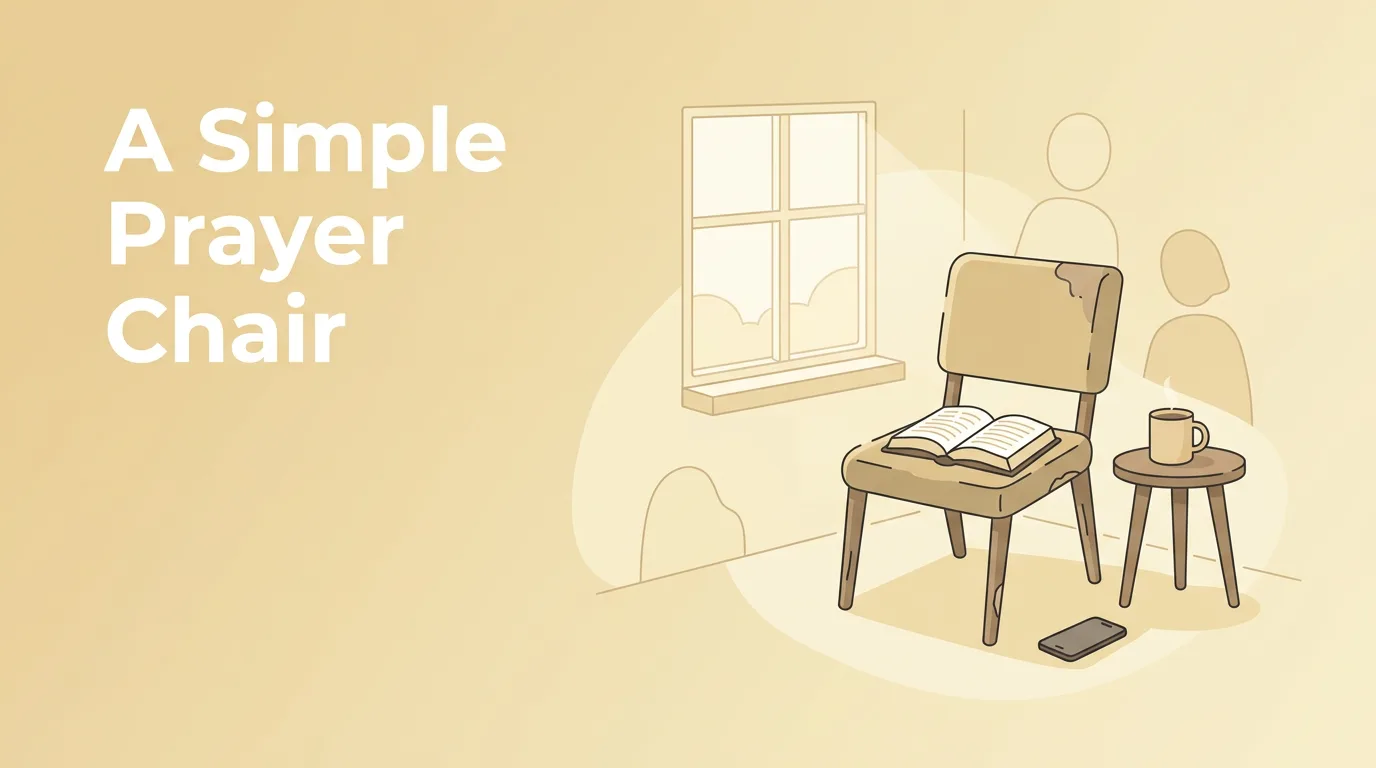
Pick one spot and let it become your prayer cue. It can be a kitchen chair, the end of the couch, a corner of your bed, or the front seat of your car before work. A sunrise prayer routine grows faster when your body knows where to go before your mind fully wakes up.
The prayer chair principle
Choose a place that is plain and repeatable. Put your Bible there. Leave a pen there. If possible, charge your phone somewhere else. This is not about creating a perfect quiet time space. It is about reducing decisions in the first five minutes of the day.
"Very early in the morning, while it was still dark, Jesus got up, left the house and went off to a solitary place, where he prayed. - Mark 1:35"
Use posture to help your attention
Your posture matters because your body is not separate from your attention. If you stay half-asleep under the covers, you will probably drift. Try sitting upright in a chair, kneeling by the bed, or standing with your Bible on a counter. A daily devotion habit often becomes steadier when your posture says, "I am here now."
- Sit upright if you tend to fall back asleep.
- Kneel if you want a posture of honesty and surrender.
- Stand and read a Psalm aloud if your mind feels dull.
- Walk slowly and pray if you wake up restless or anxious.
Make the first version almost too small to fail
Here is a simple starter plan for a sunrise prayer routine. Keep it small for two weeks. Do not expand it just because day three felt strong.
- Alarm rings.
- Put both feet on the floor.
- Go to your chosen place.
- Pray for 60 seconds in your own words.
- Read one short passage, like a Psalm or a few verses from a Gospel.
- Write one sentence: "Today, help me notice..."
That is enough. You can always stay longer, but the baseline should be short enough that you can keep it on a rough Tuesday, after a bad night of sleep, or with a baby stirring in the next room.
Plan for the first phone reach
The first phone reach is usually not a moral failure. It is a rehearsed reflex. So treat it like a habit loop, not a shame story. Move your charger across the room. Use a real alarm clock if needed. Put your Bible where your phone used to be. If necessary, lock distracting apps until after prayer. A sunrise prayer routine is easier when distraction is not the first thing waiting for you.
Need help slowing the first scroll?
Prayin lets you lock distracting apps behind a 60-second prayer, so your first reach can become a small return to God instead of another automatic scroll. It is gentle, private, and built for real mornings.
Install PrayinBuild simple accountability that does not shame you
Accountability works best when it is light, specific, and honest. You do not need a dramatic system. You need one person, one check-in, and one simple question.
Three accountability options
- Text a friend one word after prayer: "done."
- Use a shared note with a spouse and mark the days you showed up.
- Set a weekly check-in question: "What made prayer easier this week? What made it harder?"
Notice that none of these methods depend on pretending you are doing great. A healthy daily devotion habit grows in truth, not performance.
What to do in week two
Week two is where many people quietly quit. The novelty is gone. The alarm feels rude. Prayer feels dry. This is the moment to get simpler, not to give up. On low-motivation days, reduce the practice to this: sit down, breathe, say "Lord, here I am," and read one verse. Keeping the thread matters more than having a moving experience.
"Let us not become weary in doing good, for at the proper time we will reap a harvest if we do not give up. - Galatians 6:9"
When quiet time feels flat
A flat quiet time is still a real one. You are not trying to manufacture a feeling. You are practicing availability. Some mornings will feel clear and warm. Others will feel ordinary. Faithfulness is not measured by intensity.
- Read a Psalm out loud when your thoughts are scattered.
- Pray through the Lord's Prayer when you have no words.
- Use a short written prayer when your brain feels foggy.
- Ask only one honest thing: "What do I need to bring to God today?"
A realistic morning template
If you want a fuller christian morning routine, try this 7-minute version.
- Minute 1: Sit down and take a slow breath.
- Minute 2: Thank God for one specific mercy.
- Minutes 3-4: Read a short passage.
- Minute 5: Ask, "What is this showing me about God?"
- Minute 6: Pray for your day ahead.
- Minute 7: Choose one sentence to carry with you.
If you miss a day, restart the next morning without making a speech about it. Return is part of the practice.
Frequently asked
How do I start a sunrise prayer routine if I always check my phone first?
Move your phone farther away, prepare one prayer spot, and make your first prayer only 60 seconds long. Lowering friction helps you start before your reflex takes over.
How long should a christian morning routine be?
Start with 3 to 7 minutes. A short routine you actually keep is better than a long plan you abandon after a week.
What if my quiet time feels dry every morning?
Dryness does not mean failure. Keep showing up, use simple Psalms or written prayers, and let consistency matter more than emotion.
Can a daily devotion habit work with kids or a changing schedule?
Yes. Attach it to a repeatable cue, like after the alarm or before coffee, and keep the baseline small enough for disrupted mornings.
Start your trial
The apps that pull at you stay quiet until you pray. Christian screen-time, built on Apple Family Controls.
Install Prayin Lock