Morning Prayer Stack: A Quiet Time Routine for Week-Two Christians
A quiet time routine for Christians who keep starting over. Build a simple morning practice that survives the alarm, the first phone reach, and low motivation.
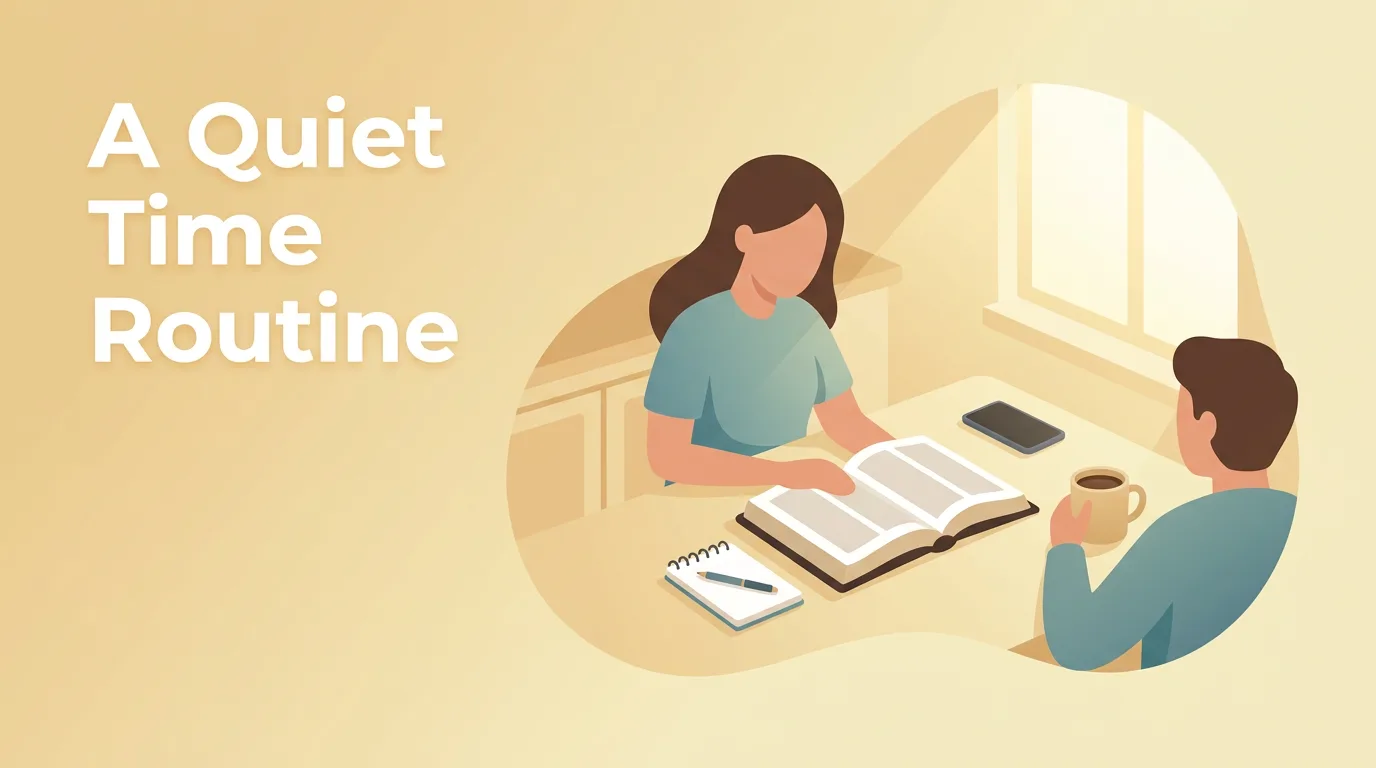
A quiet time routine usually does not fail because you do not love God. It fails because mornings are crowded, your body is tired, and your phone is faster than your intentions. If you have ever done well for six days and then lost the thread on day seven, you are not strange. You are human, and you probably need a routine that is smaller, clearer, and easier to repeat.
Why week two usually falls apart
The first few days run on sincerity. After that, your daily devotion habit has to run on structure. That is the part many of us skip. We imagine we will wake up motivated, sit down peacefully, and want morning Bible reading before anything else. Then real life shows up. The alarm feels rude. A child wakes early. Work starts heavy. The phone offers a faster reward.
- You did not decide where prayer would happen.
- You did not decide what the first 3 minutes would include.
- You relied on feeling spiritual instead of making the next step obvious.
- You left your phone close enough to become your default liturgy.
"In the morning, Lord, you hear my voice, in the morning I lay my requests before you and wait expectantly." - Psalm 5:3
Build a quiet time routine that is hard to miss
1. Choose a place before you choose a plan
A specific place matters more than an impressive plan. Pick one chair, one corner of the couch, or one spot at the kitchen table. Your brain learns by association. When you return to the same place, your body begins to understand, "this is where I slow down." A christian morning routine gets stronger when the place stays consistent, even if the time shifts from 6:30 to 7:15.
2. Keep the first five minutes embarrassingly simple
If your routine only works on your best days, it is too fragile. Try this five-minute pattern: sit down, open Scripture, pray one honest sentence, read one passage, write one line. That is enough to protect a quiet time routine from perfectionism. You can always keep going, but you do not have to.
- Minute 1: Sit still and take one slow breath.
- Minute 2: Pray, "Lord, here I am. Help me pay attention."
- Minute 3: Read a short Psalm or Gospel paragraph.
- Minute 4: Notice one word or phrase that stands out.
- Minute 5: Write one sentence you can carry into the day.
3. Make the phone harder to reach
If you want a real before phone prayer practice, remove the easy path to distraction. Charge your phone across the room. Leave it outside the bedroom if possible. Put your Bible, notebook, or printed verse where your hand naturally lands first. Good habits often begin as good friction.
Need help guarding your first minutes?
Prayin can lock distracting apps until you pause for 60 seconds of prayer. It is a simple way to protect your quiet time routine when your phone reach is stronger than your plans.
Install PrayinUse posture and accountability, not just willpower
Let your posture help your attention
Posture is not magic, but it does teach the body. If lying in bed leads to drifting, sit upright in a chair. If your mind is anxious, place both feet on the floor. If you feel scattered, open your hands on your lap as a sign of surrender. A sustainable christian morning routine uses the body as an ally, not an afterthought.
Try two kinds of accountability
Accountability works best when it is honest and light. You do not need a performance report. You need a small way to stay visible.
- Person accountability: Text one friend a simple word after you finish, like "done," "read," or "prayed."
- Visual accountability: Keep a paper calendar and mark each day you showed up. Do not chase a perfect streak. Chase a visible rhythm.
- Recovery accountability: Decide now that if you miss a day, you restart the next morning without adding guilt speeches.
"Little by little, one travels far." - J.R.R. Tolkien
What to do when motivation fails
Motivation will fail. That does not mean the practice is broken. It means the practice is becoming real. The goal is not to feel eager every morning. The goal is to make one faithful turn toward God, even when your heart feels slow.
On low-energy mornings, use the minimum version
- Read one Psalm out loud.
- Pray the Lord's Prayer slowly.
- Sit in silence for 60 seconds and offer God your day.
- Write one need, one gratitude, and one name of God.
On chaotic mornings, move the practice, do not cancel it
If the baby is awake, the bus is early, or you overslept, keep the commitment but shrink the format. Pray at the sink. Read a verse while toast cooks. Speak to God in the car before the podcast starts. A daily devotion habit survives by adapting without disappearing.
A seven-day starter plan
- Day 1: Pick your place and leave your Bible there tonight.
- Day 2: Use the five-minute pattern only.
- Day 3: Put your phone out of reach before bed.
- Day 4: Text one friend your plan for tomorrow morning.
- Day 5: Add one line of journaling after reading.
- Day 6: Practice the minimum version on purpose, even if you feel fine.
- Day 7: Review what helped, what got in the way, and what time realistically fits your life.
Frequently asked
How do I start a morning prayer practice if I always check my phone first?
Make the phone harder to reach and place your Bible or a printed prayer where your hand lands first. Start with a two to five minute routine so the first step feels doable.
What is a realistic quiet time routine for busy Christians?
A realistic routine is short, repeatable, and tied to a specific place. Five minutes of prayer and Scripture at the kitchen table is better than a perfect plan you quit by next week.
How long should morning quiet time be?
Long enough to be consistent. For many people, five to ten minutes is a strong beginning, and it can grow naturally over time.
What if I miss several days of my daily devotion habit?
Restart with the smallest version the next morning. Do not try to make up for missed days with a bigger plan, just return to the next faithful step.
Start your trial
The apps that pull at you stay quiet until you pray. Christian screen-time, built on Apple Family Controls.
Install Prayin Lock