How a Pocket Psalm Can Reshape Christian Screen Time
Christian screen time often unravels in the small gaps of the day. A pocket psalm offers a practical, scripture-grounded way to slow the reflex, recover attention, and pray before you open your phone.
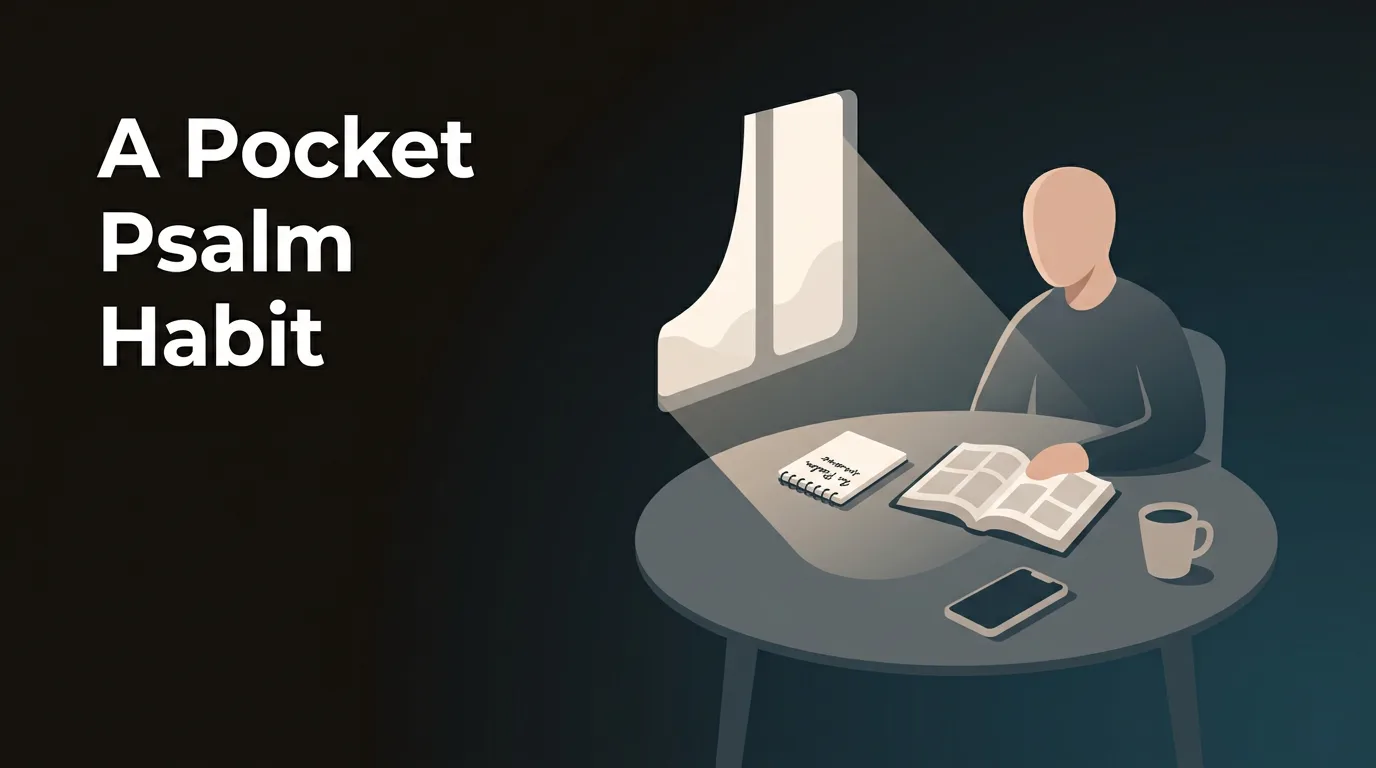
Pocket psalm is a small habit for the moments when your hand reaches for your phone before your mind is even awake. If your attention feels thin, your prayer life scattered, or your Bible reading crowded out, this is a gentle way to interrupt the reflex without pretending the struggle is simple.
Why the reflex matters
Most of us do not lose hours only through dramatic binges. We lose them in fragments - thirty seconds here, three minutes there, one check that becomes seven. The problem is not merely technology. It is the way repeated checking trains the heart to expect constant stimulation and makes quiet before God feel harder than it should.
"Be still, and know that I am God. - Psalm 46:10"
That verse is not a command to become emotionally flat. It is an invitation to stop grasping for control. A phone can become one more way we avoid stillness, especially when we are tired, anxious, or unwilling to sit with what is in us.
What a pocket psalm is
A pocket psalm is one short passage from the Psalms that you carry into the ordinary interruptions of the day. You choose one verse or a few lines, write it down, memorize it loosely, and return to it before opening a distracting app or when you feel the urge to check for relief.
Why the Psalms work well
- They are honest enough for anxiety, anger, guilt, and weariness.
- They give you words when your own words are scattered.
- They retrain attention by turning impulse into address to God.
- They are short enough to use in real life, not only in ideal quiet time.
This is not magic, and it is not a productivity trick wearing Christian language. It is a way of making your first movement a prayer instead of a scroll.
How to start the habit in one week
Day 1: choose one psalm line
Pick one verse that matches the place where your phone use tends to go wrong. If you reach for your phone in stress, try Psalm 61:2. If you feel restless, try Psalm 131:2. If you feel mentally crowded, try Psalm 19:14.
Day 2: place it where your hand already goes
Write the verse on a card in your wallet, on a lock screen wallpaper, or on a sticky note near your charger. The point is not aesthetic beauty. The point is friction. You are giving your hand somewhere else to land before the app opens.
Day 3 to Day 5: pair it with one trigger
Do not try to redeem every screen habit at once. Attach your pocket psalm to one recurring moment: before Instagram at lunch, before late-night news checking, or before opening games when you feel depleted. Whisper the verse once, then decide whether you still need the app.
Day 6: add one honest sentence
After the verse, pray one plain sentence: "Lord, I am avoiding silence," or "Father, I want comfort without coming to You first." Specific prayer breaks denial. It helps you name what the phone is doing for you.
Day 7: review without shame
Ask two questions: When did the verse help, and when did I ignore it? This is not a pass-fail test. It is attention training. Honest review matters more than perfect consistency.
Three psalms for three common phone temptations
- For anxiety checking: "When my heart is faint, lead me to the rock that is higher than I." - Psalm 61:2
- For restless comparison: "I have calmed and quieted my soul." - Psalm 131:2
- For careless consumption: "Let the words of my mouth and the meditation of my heart be acceptable in your sight." - Psalm 19:14
Notice that each verse does more than restrain behavior. It redirects desire. That is what lasting change requires. Mere rules may reduce usage for a while, but love, repentance, and reorientation go deeper than willpower alone.
Try a gentler barrier
If you want help turning impulse into prayer, Prayin can lock distracting apps until you pause for 60 seconds of guided or personal prayer. It is a practical way to put Scripture and prayer before the scroll.
Install PrayinWhat this habit can and cannot do
A pocket psalm can help recover small moments that usually disappear. It can make your phone feel less automatic. It can prepare your heart for deeper phone discipline and wiser Christian screen time habits. But it cannot carry your whole spiritual life. You still need ordinary practices like church, longer prayer, scripture reading, confession, and sleep.
It also will not remove the deeper reasons you overuse your phone. Sometimes the issue is loneliness. Sometimes it is resentment. Sometimes it is exhaustion. Sometimes it is a fear of being alone with your thoughts. Scripture helps us tell the truth about those things, but truth-telling can be uncomfortable before it is freeing.
A quiet next step
Choose one verse tonight. Write it where you will see it tomorrow. Then give that verse one ordinary doorway into your day. Do not aim for a dramatic transformation by the weekend. Aim for one less reflex, one more prayer, and a little more room to hear God in the middle of an ordinary life.
Frequently asked
What is a pocket psalm?
A pocket psalm is a short verse from Psalms that you keep with you and repeat before opening distracting apps or when you feel the urge to check your phone.
How does a pocket psalm help with phone overuse?
It creates a brief pause between impulse and action, giving you words to pray and helping retrain attention away from automatic scrolling.
Which psalm is best for anxiety and phone checking?
Many Christians find Psalm 61:2 helpful because it turns panic into a direct cry to God instead of another round of checking.
Can I use this with an app blocker?
Yes. A Scripture habit works well with practical tools that add friction, especially if the tool redirects you into prayer instead of only restriction.
Start your trial
The apps that pull at you stay quiet until you pray. Christian screen-time, built on Apple Family Controls.
Install Prayin Lock