Evening Examen for Screens: A Christian Attention Habit That Ends the Scroll
An evening examen for screens can help Christians notice phone overuse without shame, repent honestly, and rebuild attention for prayer, Scripture, and home life.
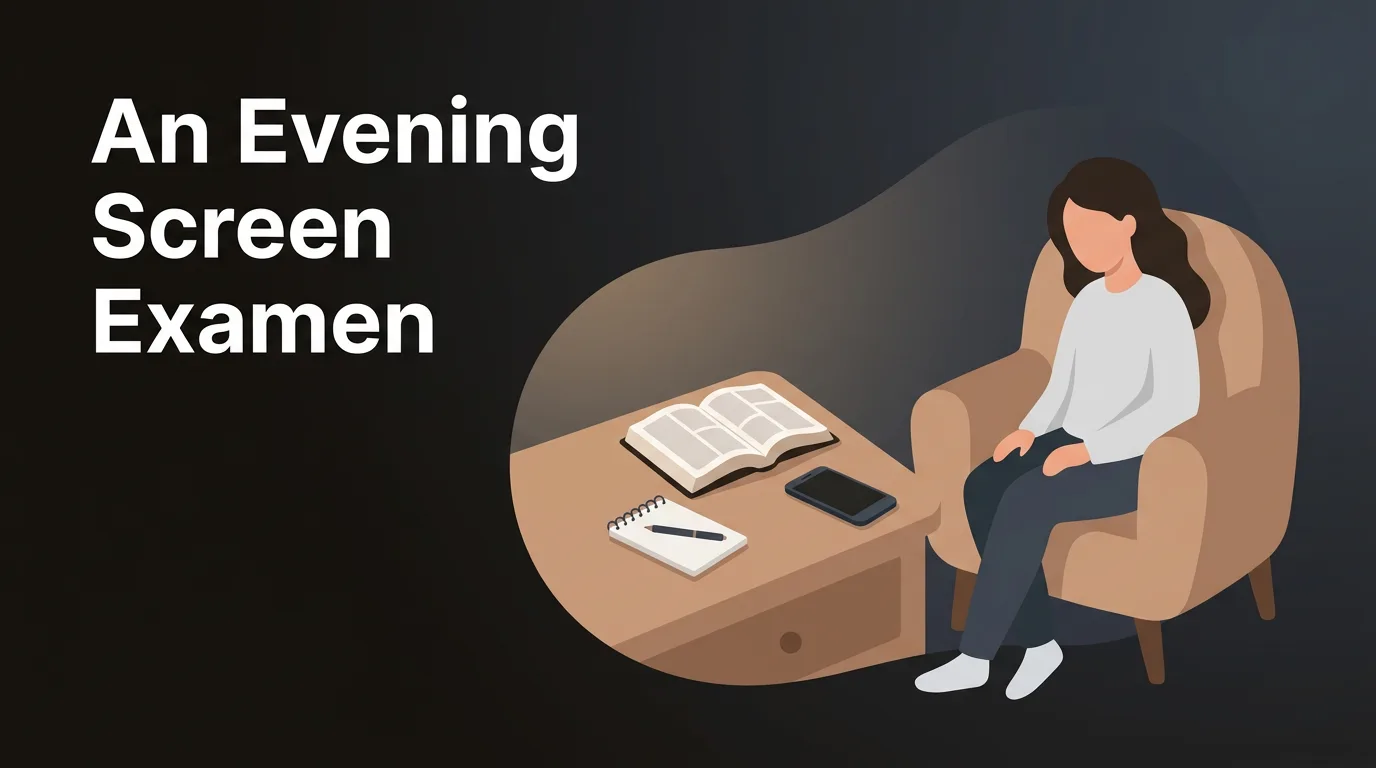
If your phone seems to take the best of your mind by the end of the day, an evening examen can help. This is not about panic, guilt, or pretending your screen is the worst thing in your life. It is a simple prayerful review that helps you tell the truth about where your attention went, where love thinned out, and where God is still meeting you.
Why this habit works at night
Most people try to fight distraction in the middle of temptation. That matters, but the deeper work often happens later, when the house is quieter and you can look back honestly. An evening examen slows the blur. Instead of saying, 'I was on my phone too much again,' you begin to name the real moments: the anxious reach, the boredom scroll, the small refusal to be present, the tired avoidance of prayer.
"Search me, O God, and know my heart... and lead me in the way everlasting." - Psalm 139:23-24
What an evening examen for screens is
The historic examen is a short prayer of reflection, often practiced at the end of the day. Applied to screens, it becomes a way to review your digital life before God. Not to obsess over minutes, but to ask better questions. When did my phone serve love? When did it steal attention? When did I turn to it for comfort that should have become prayer?
It is not a productivity trick
Many forms of phone overuse are not really time-management problems. They are spiritual and emotional habits. We reach for the device because we do not want to feel restless, lonely, uncertain, or ordinary. A Christian response needs more than stricter settings. It needs honesty, confession, and a renewed willingness to be still before God.
- Set aside 5 minutes before bed with your phone face-down or in another room.
- Ask God for light. Simply pray, 'Lord, help me see this day truthfully and gently.'
- Review your day in order. Notice the moments your phone helped you serve, connect, learn, or rest well.
- Notice the moments you used it to avoid something: prayer, conversation, work, grief, silence, or sleep.
- Confess one specific pattern, not a vague feeling. Name it plainly.
- Receive grace. Do not end with self-accusation. End with the mercy of Christ.
- Choose one small change for tomorrow, such as charging your phone outside the bedroom or locking one app after 9 p.m.
Three questions to ask every night
1. When did my phone interrupt love?
Did you drift from a child's story, half-listen to your spouse, or scroll through dinner cleanup instead of helping? Distraction is rarely neutral. It often takes attention away from the people God has actually placed in front of us.
2. What feeling sent me to the screen?
This question is where an evening examen becomes useful. Maybe the trigger was anxiety after work, disappointment after a hard conversation, or plain mental fatigue. Once you know the feeling, you can bring the real thing to God instead of treating the phone as a hiding place.
3. What would faithfulness look like tomorrow?
Keep the answer concrete. Not 'be better with my phone.' Try, 'I will leave my phone in the kitchen during morning Bible reading,' or 'I will pray for one minute before opening the app that usually pulls me in.' Small acts of digital discipline are often stronger than dramatic vows.
Try a gentler barrier before your next scroll
Prayin helps you place distracting apps behind a 60-second prayer, so your next reflex can become a moment of attention, confession, or peace. It is a quiet way to practice digital discipline without shame.
Install PrayinA simple nightly template
You can write this in a notebook for one week and learn a lot about your habits.
- Gratitude: Where did technology serve good things today?
- Awareness: When did I feel scattered, numb, or pulled by my phone?
- Confession: What one moment needs honest repentance?
- Grace: What does Christ offer me here instead of shame?
- Resolve: What one boundary will I practice tomorrow?
"Let us test and examine our ways, and return to the Lord!" - Lamentations 3:40
What to do when you fail again tomorrow
You probably will. Most of us do. The goal of an evening examen is not to create a flawless streak of self-control. It is to train truthful attention. Failure can become useful if it teaches you where you are weakest and where you need help, limits, and prayer. Shame says, 'hide.' Grace says, 'bring it into the light and begin again.'
Pair reflection with one practical boundary
Prayerful review should lead to action. Pick one friction point and keep it for seven days. Remove one social app from the home screen. Put the charger across the room. Lock your most distracting app after a certain hour. Keep your Bible where your hand usually reaches for your phone. Practical limits are not unspiritual. They are often how wisdom takes shape.
A quieter kind of repentance
There is a way to talk about screens that becomes loud, moralistic, and strangely proud. This is not that. A faithful Christian life is not measured by how little technology you use, but by whether your attention is being formed toward love of God and neighbor. An evening examen helps you notice whether your habits are making you more available to both.
Frequently asked
What is an evening examen for screens?
It is a short end-of-day prayer review focused on how you used your phone and where your attention went. It helps you notice patterns, confess specific moments, and choose one better habit for tomorrow.
Is phone overuse a spiritual issue or just a bad habit?
Often it is both. Screen habits involve time and behavior, but they also reveal what we run to for comfort, escape, and control.
How long should a nightly screen examen take?
Start with five minutes. The goal is consistency and honesty, not a long ritual.
Can Christians use app blockers without becoming legalistic?
Yes. A blocker is just a practical boundary. Used humbly, it can support prayer, presence, and wiser attention rather than replace them.
Start your trial
The apps that pull at you stay quiet until you pray. Christian screen-time, built on Apple Family Controls.
Install Prayin Lock