Dopamine Christian: How to Stop Checking YouTube Between Tasks
Dopamine Christian habits matter when YouTube keeps slipping into the cracks of your day. Here is a gentle, practical guide to checking less, praying more, and rebuilding attention without leaving your phone behind.
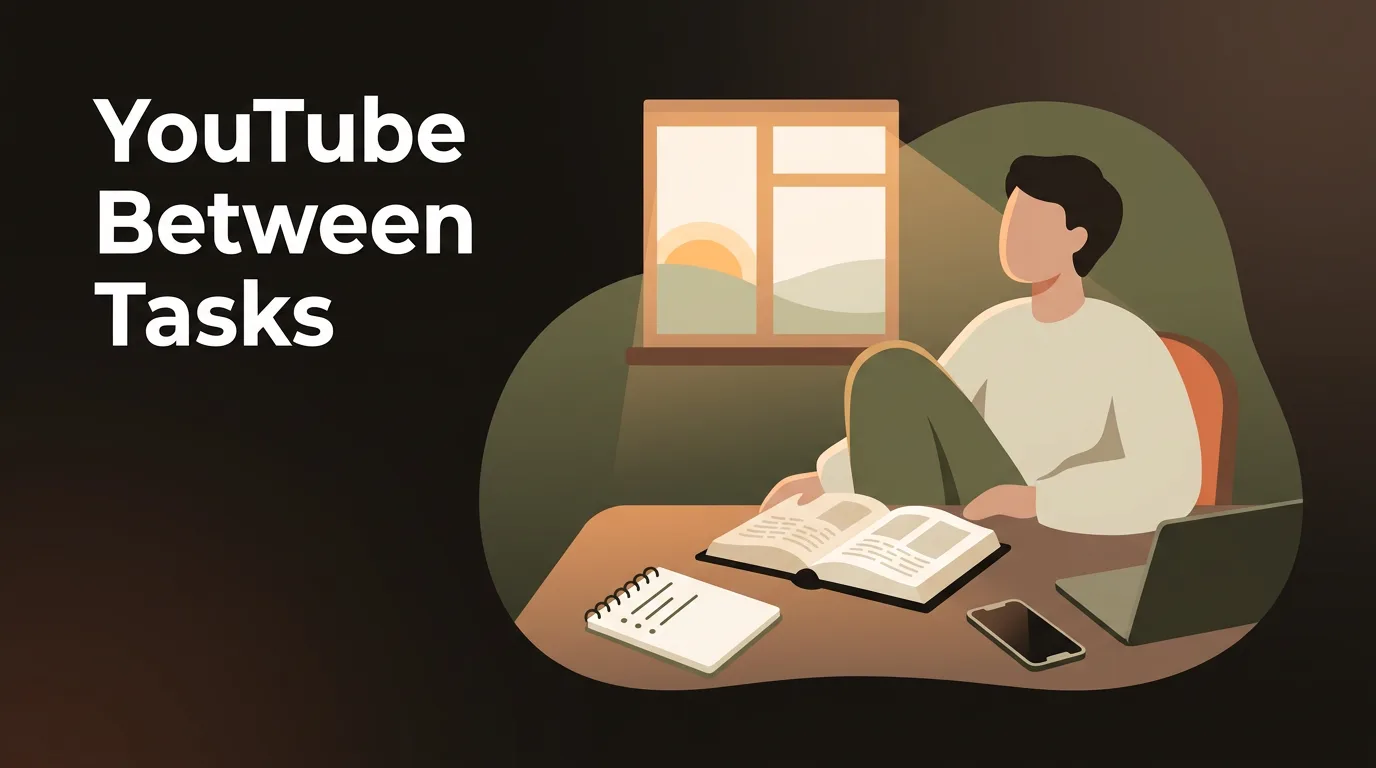
If dopamine christian sounds like an odd phrase, stay with me. Many believers are not trapped by one dramatic vice on their phones. We are simply pulled into YouTube between tasks, one quick check at a time, until our minds feel scattered, irritated, and spiritually thin.
The real struggle is not always bingeing
A lot of phone advice assumes the problem is hours of obvious scrolling. But for many workers, students, and parents, the deeper habit is the tiny escape hatch. You finish an email, feel a little mental drop, and reach for a video. You are not looking for truth or rest. You are looking for a small hit of relief.
"I have set the Lord always before me. - Psalm 16:8"
That is why this article takes a narrower angle. Instead of talking about every app, we are naming one modern reflex: checking YouTube in the in-between moments. This is where attention faith becomes very practical.
Why YouTube fits so neatly into a dopamine loop
YouTube is built for low-friction curiosity. One thumbnail promises help. Another promises entertainment. Another promises news you "should" know. The platform meets boredom, stress, and procrastination with instant novelty, which is why dopamine christian questions are not abstract. They touch ordinary workdays.
The in-between moment is the trigger
- After a hard task, your brain wants reward
- Before a hard task, your brain wants avoidance
- During a dull task, your brain wants stimulation
- In an emotional dip, your brain wants comfort
None of that means you are uniquely weak. It means you are human, and the attention economy understands your nervous system well. A wise Christian response is not shame. It is structure.
What faith says about fragmented attention
Scripture does not mention autoplay, but it says much about watchfulness, steadiness, and the inner life. Attention is not just productivity fuel. It is part of how we love God and neighbor. When every pause gets filled, we become less available for prayer, less patient with people, and less able to remain present in small acts of obedience.
"Be still, and know that I am God. - Psalm 46:10"
A digital detox christian approach does not have to mean abandoning technology. It can mean recovering the pauses where God often meets us. Silence before the next task. A breath prayer before the next tab. A moment of surrender before the next video suggestion.
A 5-day app fast christian plan for YouTube between tasks
This is not a total ban unless you need one. Think of it as an app fast christian experiment focused on one habit pattern.
Day 1 - name the exact moments
For one day, do not try to change anything. Just write down each time you open YouTube outside a planned purpose. Note the moment: after meetings, while cooking, before homework, while feeling lonely, or when avoiding something difficult. You are gathering truth, not evidence for self-accusation.
Day 2 - make YouTube intentional only
Choose two specific windows when YouTube is allowed, such as lunch and after dinner. Outside those times, the app is off-limits unless you truly need it for a defined task. This turns vague desire into a visible boundary.
Day 3 - replace the transition ritual
- When you finish a task, stand up before touching your phone
- Take three slow breaths and thank God for help with the previous task
- Ask, "What is the next faithful thing?"
- If you still want YouTube, wait 60 seconds first
Day 4 - add prayer to the urge
This is where dopamine christian practice becomes discipleship. When you feel the pull, do not only resist it. Bring it to God. Pray something simple like, "Lord, I want relief more than I want presence right now. Meet me here." That small honesty matters.
Day 5 - keep one purposeful use, remove the rest
Maybe you use YouTube for tutorials, sermons, music, or exercise. Keep one or two purposeful uses and cut the casual checking. Boundaries are easier to keep when they are specific.
Practical boundaries that work in real life
- Move YouTube off your home screen so it is not your first reflex
- Turn off non-essential notifications so the app stops calling for you
- Write down what you came to watch before opening the app
- Use a timer for planned viewing, especially during work breaks
- Do not open YouTube in bed or in the first minutes of the morning
- Pair your urge with a short prayer instead of a lecture to yourself
Try a gentler kind of phone discipline
Prayin helps you lock distracting apps behind a 60-second prayer. If YouTube keeps catching your in-between moments, let the pause become a place of honesty, not shame.
Install PrayinWhen the urge is emotional, not informational
Sometimes you are not looking for content. You are looking for numbness, company, or escape. That is why social media faith conversations often miss the heart of the issue. The question is not just, "How do I use apps less?" It is also, "What pain am I trying not to feel for the next two minutes?"
If that feels familiar, try this short check-in before opening YouTube: What am I feeling? What am I avoiding? What do I need from God right now? This is the kind of phone discipline that reaches beneath behavior.
A simple theology of the gap
The small spaces in your day matter. The gap between two tasks can become a training ground for desire. You can fill it automatically, or you can offer it back to God. Over time, that quiet choice shapes your heart. This is part of attention faith - learning that every moment does not need to be optimized or anesthetized.
What progress can look like
- You still watch YouTube, but not automatically
- You notice the urge sooner
- You pray faster than you open the app
- Your work transitions feel calmer
- You recover more quickly after a distracted day
That is real growth. Not perfection, not a heroic digital detox christian story, just a quieter and more truthful life with your phone.
Frequently asked
What does dopamine christian mean?
It is a simple way to talk about how reward-seeking habits affect spiritual attention. The goal is not to fear pleasure, but to notice when quick stimulation starts ruling your reactions.
How can I stop checking YouTube so often as a Christian?
Start by identifying your trigger moments, then limit YouTube to planned times and add a short prayer before opening it. Simple structure usually works better than harsh self-talk.
Is an app fast christian practice better than deleting YouTube?
Often, yes. A focused fast can reveal why you reach for the app and help you build boundaries you can actually keep in normal life.
Can prayer really help with phone discipline?
Yes. Prayer slows the reflex, names what is happening in your heart, and creates a moment to choose differently instead of reacting automatically.
Start your trial
The apps that pull at you stay quiet until you pray. Christian screen-time, built on Apple Family Controls.
Install Prayin Lock