Attention Faith at the Grocery Store: How Checkout-Line Scrolling Trains Your Heart
Attention faith gets shaped in small moments, like the grocery store line. Learn how to turn checkout-line scrolling into a gentle Christian phone discipline.
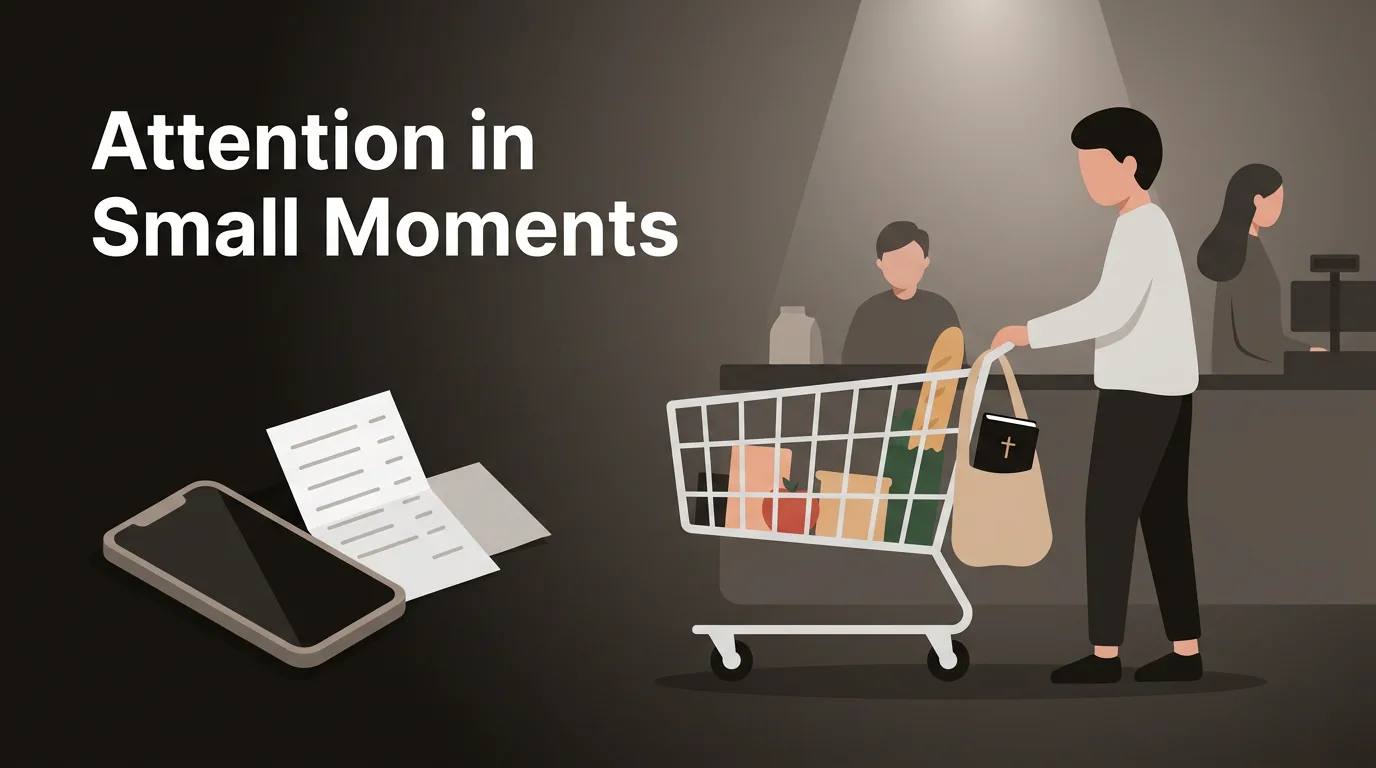
Attention faith is rarely lost in dramatic moments. More often, it is thinned out in the ordinary pauses of the day, when the grocery line stalls, when the coffee is not ready, when the elevator is slow, and the hand reaches for the phone before the heart notices. If you have ever opened an app without meaning to, this is not about shame. It is about seeing how small habits quietly disciple us.
Why the checkout line matters
A checkout line seems too small to matter. But attention is formed in repetitions, not speeches. Ten seconds here, forty seconds there, three minutes in the car before walking inside, these little openings become the places where our minds learn what to do with discomfort, boredom, and delay.
The attention economy understands this well. Platforms are built to notice hesitation and convert it into engagement. In other words, your waiting is valuable to someone. That does not mean every app is evil. It means your unclaimed attention will always be claimed by something.
"Be still before the Lord and wait patiently for him. - Psalm 37:7"
The theology of tiny waits
Christians often think about faithfulness in big categories - church, prayer, generosity, service. But attention faith asks a quieter question: what happens in the ten unplanned seconds no one sees? Waiting can become a place of agitation, consumption, avoidance, or prayer. It can also become a place where we relearn that we do not need constant input to remain okay.
What your reflex may be revealing
- You may be using scrolling to avoid silence.
- You may be soothing low-grade anxiety with novelty.
- You may be filling every pause so you never feel your own limits.
- You may simply have a trained habit loop, not a character failure.
That last point matters. Some of what feels deeply spiritual is also deeply practical. A repeated cue, like standing in line, can trigger an automatic behavior before you consciously choose it. Naming the loop helps you interrupt it.
A simple app fast for one repeated moment
If a full digital detox christian approach feels unrealistic, start narrower. Choose one setting this week: grocery lines. That is your app fast christian experiment. Not all day, not forever, just in that one recurring place.
How to practice it
- Before entering the store, put your phone on Do Not Disturb.
- Pick one locked app that usually catches you first, like Instagram, TikTok, or a news feed.
- When you reach the line, leave the phone in your pocket, bag, or cart.
- Use one short prayer: "Lord, settle my mind while I wait."
- Notice what rises first - impatience, fatigue, loneliness, mental noise. Offer that honestly to God.
- When the urge feels strong, take one slow breath instead of one quick scroll.
This is where dopamine and faith meet in an everyday way. Your brain expects a tiny reward from novelty. Choosing not to give it immediate stimulation can feel surprisingly exposing. But that exposure can become clarity. You begin to see what your heart has been reaching for.
Try a gentler interruption
Prayin helps you place a small pause between impulse and app use. You choose which apps to lock, and before opening them, you spend 60 seconds in prayer - guided or in your own words. It is a simple way to build social media boundaries christian habits without deleting everything.
Install PrayinWhat to do instead of scrolling
The goal is not to stare blankly and prove your discipline. The goal is to replace reflexive consumption with a more grounded response. Here are a few options for the next time you are waiting.
- Pray for the people around you without needing to know their stories.
- Recall one verse you already know, even if it is just one line.
- Thank God for three ordinary gifts in front of you.
- Relax your shoulders and unclench your jaw.
- Ask, "What feeling was I trying not to feel just now?"
A small liturgy for the line
"Lord Jesus, keep my mind from scattering. Teach me to wait without reaching for noise. Meet me in this ordinary place. Amen."
This kind of practice slowly reshapes attention faith. It does not make you less engaged with the world. It makes you less available to every demand the world makes on your eyes.
If you need social media for real life
Many readers cannot simply leave platforms behind. Work updates happen there. School groups post there. Family photos live there. That is why social media boundaries christian wisdom matters more than all-or-nothing advice. You may not need to quit the platform. You may need to stop handing it every spare second.
- Use apps on purpose-filled windows, not in random fragments.
- Decide in advance which app is for work, which is for connection, and which is mostly drift.
- Keep one or two daily phone-free zones, especially lines, bathrooms, and the first minutes after waking.
- Let prayer be the threshold before entertainment, not only the repair after regret.
The point is not perfection
You will forget. You will reach for the phone halfway through this experiment. You may unlock an app before you remember what you intended. That does not make the practice false. It means you are learning. Christian phone discipline is usually built less by heroic vows and more by small returns.
So the next time you are standing in line, try receiving the moment instead of escaping it. A grocery store is not a monastery. But even there, God can teach a person how to wait.
Frequently asked
How can Christians stop checking social media in every idle moment?
Start with one recurring situation, like checkout lines or elevators, and make it a no-scroll zone. Small, specific boundaries are easier to keep than vague promises.
What is an app fast for Christians?
An app fast is a temporary, intentional break from one app or one usage pattern so you can notice your habits, pray, and regain agency without needing to delete everything.
How does dopamine affect faith and attention?
Frequent novelty can train the brain to avoid silence and seek constant stimulation. Over time, that can make prayer, waiting, and focus feel harder than they are.
Is a digital detox realistic if I need social media for work or family?
Often the better goal is not total removal but clearer limits. Use platforms in planned windows and protect small everyday spaces from automatic scrolling.
Start your trial
The apps that pull at you stay quiet until you pray. Christian screen-time, built on Apple Family Controls.
Install Prayin Lock